Alignment: Difference between revisions
1d4chan>FlintTD format, format, how I love thee, let me count the added links |
No edit summary |
||
| (313 intermediate revisions by more than 100 users not shown) | |||
| Line 1: | Line 1: | ||
{{skubby}} | |||
[[Image:ALIGNMENT_CHART.jpg|thumb|The old reliable]] | [[Image:ALIGNMENT_CHART.jpg|thumb|The old reliable]] | ||
Alignment is a | '''Alignment''' is a key game element that originated in [[D&D|Dungeons and Dragons]]. People, creatures, spells, objects, and places can have an alignment. The term is used in other role-playing games whenever characters or NPCs have a simple stat for their own code of conduct. Alignment has spawned more [[RAGE|debates]] and motivational posters than anything else in D&D, and alignment threads now belong in /co/ after we swapped them for Empowered. Post alignment threads at risk of sagebombing. If you're looking for the true idiocy, see the [[Stupid Alignments]] page. | ||
Alignment | =NOTICE= | ||
Alignment is designed to be a rough explanation of motivation for characters in fiction, rather than a real world moral philosophy; e.g. Captain America is Lawful Good, a rebel fighting against a tyrannical [[megacorp]] is Chaotic Good, [[Sauron]] is Lawful Evil, Robin Hood is Chaotic Good, a crazed stab-happy maniac is Chaotic Evil, etc. There is considerable disagreement as to what constitutes Lawful Good or Lawful Evil. Is a cop who follows generally sound procedure to the letter all the time even when it's obviously wrong or a generally principled frontier sheriff who enforces rather brutal but fair justice in a lawless land Lawful Good or not (Lawful Neutral, Chaotic Good, etc.)? Different people will give you different answers. Both intent and methods are factors in the equation, but again, the degree to which they matter and the specifics of what adds up to what is one of contention (not to mention the author intent — sometimes precluded by bad writing — and in versus out of universe consideration). | |||
'''[[TL;DR]]:''' | |||
<div style=font-size:xx-large><div class="center" style="width: auto; margin-left: auto; margin-right: auto;">'''''BEWARE! HYPER [[Skub|SKUB]] ZONE AHEAD!'''''</div></div> | |||
==Alignment in Different Editions== | |||
*Dave Arneson's [[Blackmoor|First Fantasy Campaign]] has three alignments: Good, Neutral, and Evil. The forces of Good included The Blue Rider, known for "riding hither and yon fighting the forces of evil and carrying off any likely wench encountered". Because of the framework of the First Fantasy Campaign, it's best to understand alignment as "allegiance". | |||
[[ | *[[Dungeons & Dragons#Basic Dungeons & Dragons|The original D&D]] goes to a less clear-cut list (Lawful, Chaotic, and Neutral), but does not explain the precise meaning of these terms. The reader is left to interpret them from a list of examples. The side of Law includes Halflings, Patriarchs, and Treants; the Neutrals includes animals, Dryads, and Minotaurs; and the Chaotics are entities such as undead, "Evil High Priests", and Hobgoblins. | ||
*[[Advanced Dungeons & Dragons|Advanced D&D]] (aka 1st edition) combined these alignment systems, with one axis for Good, Evil, and Neutral, and another for Lawful, Chaotic, and Neutral. Different alignments had their own "alignment languages" to allow them to properly identify one another. Interpretations of alignment language are controversial in their own right. Gygax compared alignment language to religious languages, especially Latin in the Catholic Church. | |||
*[[Advanced Dungeons & Dragons#AD&D 2nd Edition|AD&D 2nd Edition]] made a radical change to the alignment system, by defining alignment as the character's "basic moral and ethical attitudes toward others, society, good, evil, and the forces of the universe in general". While the 1st Edition grid was used, it had gone from being the character's allegiance or team to a personality test. Alignment language was axed. | |||
* [[ | *[[Dungeons & Dragons 3rd Edition|3rd]] (and 3.5) Editions made no changes to alignment. Same two-axis method, same class restrictions, same hating people who were on the other side of the chart from you. | ||
* [[ | * [[4th Edition Dungeons and Dragons|4th Edition]] made a [[skub|controversial]] change. Instead of the classic 3×3 grid which has been in place since the 1970's, the alignment system was changed to a single axis with four positions: good, lawful good, evil, and chaotic evil, with the added option of being unaligned (not smart enough to understand alignments, or simply can't be bothered to give a shit — not to be confused with the old Neutral, although in practice it was heavily associated with it). As with many of the changes implemented in 4E, this has caused much [[Rage|heated, vigorous discussion]] about the subject. | ||
**Ironically, the designers felt Good and Evil suffered from opposite problems; Lawful Good and Chaotic Evil were quite clearly defined (Lawful Good: benevolent but constrained by external laws, Chaotic Evil: batshit insane psycho random evulz), but Neutral/Chaotic Good and Lawful/Neutral Evil tended to sort of blur together. The point was that alignments should be a conscious effort on the part of the player, rather than acting as a personality anchor: Lawful Good and Chaotic Evil both represent very specific takes on Good and Evil (equal emphasis on law & order as to good for the former, mindlessly impulsive and often self-destructive evil for the latter). However, unless you were the kind of guy who really bothered to get into the nitty-gritty of the Law-Chaos axis splits, Neutral and Chaotic Good tended to be interchangeable in terms of being "I do good, no matter what the law has to say about it" alignments; Lawful and Neutral Evil were likewise interchangeable in terms of being "the evil I do serves a purpose and isn't just for random shits 'n' giggles". Moreover, the Morally Neutral alignments were stripped out under the basis that they tended to just be played as extreme parodies for Lawful/Chaotic Neutral (see: [[Lawful Stupid]], [[Chaotic Stupid]]) or else made little sense for an adventurer (True Neutral). Therefore, the concept of alignment was changed to whether or not a character actively pursues Good or Evil (hence the Lawful Good, Good, Evil, and Chaotic Evil aligments, which cover the "how" of supporting good/evil) or simply doesn't care for greater meta-cosmological implications and is out for their own goals (Unaligned). | |||
* [[ | *[[Dungeons & Dragons 5th Edition|5th Edition]] brought back the old grid of nine options based on Law to Chaos and Good to Evil, but drastically shortened the descriptions (their PHB entries average 2 to 3 sentences, and one of those sentences is usually a description of what critters are usually members of that alignment). It also followed in 4e's footsteps by minimizing the actual crunch-value of alignment (even traditional alignment-requiring classes like the [[Paladin]] and [[Monk]] no longer need to be a specific alignment or lose their powers) and retaining Unaligned, though this "tenth alignment" is reserved exclusively for the sorts of creatures that are too nonsapient to have an alignment. In other words, 5e Unaligned is "too dumb to understand concepts of law, chaos, good, or evil", whilst Neutral is "recognizes law/chaos/good/evil and deliberately plants the fence up their ass or lacks the power or agency to change the world". | ||
==Controversy caused by the 2nd Edition Change== | |||
Making alignment a personality system has led to [[rage|vigorous]] [[Skub|debate]]. | |||
Some argue that taking alignment seriously in any way entails [[Fail|failure]] because it tries to simplify and categorizes something that philosophers, sociologists, theologists, and psychologists have been debating for thousands of years with no tangible results. A [[:File:Alignments_Batman.jpg|famous example]] shows the goddamn Batman in various periods of his comic and his actions and words correspond to pretty much all existing alignments. Recent developments in D&D (Eberron, 4th Edition) have been relaxing and ignoring the old rigid structure. | |||
Others argue that those people don't understand about how the two-axis alignment system is meant to work (even the hyper-rigid structure of the 2nd Edition alignments was eventually softened to more of a Cartesian coordinates system by [[Planescape]], and ''every'' subsequent edition has eased off even further from the alignment-as-straitjacket model to an alignment-as-storytelling-tool one) and that using an inconsistent comic book character who has been written by dozens of different people over the course of his existence to try and demonstrate that the system fails is completely missing the point. | |||
[[Skub|Debate continues.]] | |||
==The iconic D&D alignments (and why your party should kill them)== | |||
[[File:Alignment Demotivational.jpg|thumb|right|350px]]The title of the section alone should be a giant neon sign to take its contents with a shaker full of salt grains (or a vat of [[skub]], we're not picky). | |||
=== | ===Lawful Good=== | ||
{{Topquote|Where men gather, a bustle of chaos ensues. I would save them all if I could.|Keldorn Firecam}} | |||
Truth, justice, apple pie, and curbstomping. Based on a combination of honor and compassion, they believe that law should be used to further the public good, compassion for others beside oneself is required, that order is separate from goodness but a vital part of it, and that no one is above the law — including themselves, so they practice what they preach. And sometimes [[Story:Powder Keg of Justice|they see large displays of violence as necessary to protect what is good/defeat what is evil, and act accordingly]]. | |||
On the downside, they tend to cause conflict when party members take actions that are less moral or more chaotic ("You are not doing good, then you must be doing evil! Taste my blade, evildoer!"). As a result, they can slip into, or get get conflated with, [[Lawful Stupid]] due to their rigid morality codes. While Lawful Stupid is a potential pitfall for any lawful characters, Lawful Good gets tarred with this brush the most, as the other Lawful alignments get written off as evil and treated accordingly when conflict arises. The difference between Lawful Good and Lawful Stupid is that Lawful Good can see the bigger picture and be intelligent. | |||
Despite popular stereotypes, Lawful Good can be reasoned with if the party does something against the law, depending on the personality and which code they follow. Or if they're a threat to the party, have the rogue engineer an "accident" for them, [[Dwarf Fortress]] style. | |||
:;''Example(s)'': A textbook Paladin who combats evil wherever they see it, to uphold their religion's core beliefs. | |||
:;''Iconic Character(s)'': The Man of Steel himself - [[Superman]], Optimus Prime, [[Discworld|Carrot Ironfoundersson]], (Sam Vimes as well, but in Vimes case, it's usually a very tarnished Lawful Good, closer to True Neutral than Carrot), [[The Dresden Files RPG|Michael Carpenter]], most interpretations of King Arthur. | |||
:;''Expected Personality'': A bold, brave, sincere, honorable, empathetic, and all-loving paladin good guy/girl at best. A stuck-up condescending prig and Chief of the Fun Police at worst. | |||
=== | ===Neutral Good=== | ||
{{Topquote|I don't care if it is legal; it's wrong.|Ava Fontaine, ''Lord of War''}} | |||
The quintessential "nice guy". Unlike the Lawful Good types, Neutral Good types draw their morality from simply being a good person, not because a book or the law told them to. It’s vague and usually boils down to trying to do whatever helps the most people, ignoring but not acting against traditions and laws. They differ from Chaotic Good in that they don't go out of their way to shake things up or "stick it to the man." Perhaps the simplest form of good, as it doesn't have as many complications as Chaotic or Lawful variants... except when you have Variant 1 (good actions no matter the consequences) [[Stupid Good]] who will try to <s>negotiate</s> ''talk things out'' with the [[BBEG|big bad]] (let them do it, but be sure to stay out of the blast radius). Another weakness of Neutral Good is that it requires the person to have a strong conscience to begin with; no doctrines to stop you also means no doctrines that can confront you with your flaws or show you how to improve yourself. A subjective morality is (more) easily warped by internal hypocrisy or temptations. Given how much debate there is about what constitutes "good", especially without going to the "Lawful" or "Chaotic" side, Neutral Good is the hardest alignment to maintain. | |||
:;''Example(s)'': A peace-loving cleric who is against the mere thought of violence, or a wandering adventurer who visits small towns and helps with various problems. | |||
:;''Iconic Character(s)'': A certain Friendly Neighborhood [[Spider-Man]], Sherlock Holmes (who was dedicated to justice, but also more than happy to break the law or let a justified killer go in order to achieve said justice), Gandalf (who did his best to advise and support kings, but avoided being beholden to them) | |||
:;''Expected Personality'': [[This Guy|An easy-going, earnest nice guy/girl]], a friendly childlike caped/masked hero, or an all-loving cleric at best. At worst, they're a compassionate but indecisive fence-sitter. | |||
===Chaotic Good=== | |||
{{Topquote|A vigilante is just a man lost in the scramble for his own gratification. He can be destroyed, or locked up. But if you make yourself more than just a man, if you devote yourself to an ideal, and if they can't stop you, then you become something else entirely.|Ra's Al Ghul}} | |||
{{Topquote|I'm dishonest, and a dishonest man you can always trust to be dishonest. Honestly, it's the honest ones you want to watch out for, because you can never predict when they're going to do something incredibly... ''stupid''.|Jack Sparrow}} | |||
Essentially adopting the credo of: "If you want peace, prepare for war", they will do good deeds and actions using rather unorthodox methods. Though this alignment can respect the law, they mostly break it in efforts to protect people, since to them the "Good" comes before the "Law". This tends to have [[skub|mixed results]]. Sure, that cop beat his wife or took drug money... and maybe that bank was run by the mafia. But the fact remains he broke rules — he broke them for good reasons, but he broke them. His well-intentioned extremism is going to get you in deep shit with the man, so be sure to betray him to the establishment at first opportunity. For an apt summary, think Robin Hood. Beware of variant 2 (good consequences no matter the actions) [[Stupid Good]]. | |||
A variation that also falls under this category is the "thief with a heart of gold" — people like Han Solo who were thrust into a life of crime by circumstance and generally aren't above harming people, but have kept their moral compass intact and will, for example, outright refuse to steal a valuable artifact if they see that its value to its owner far exceeds its material worth (think of a precious silver locket that holds a picture of a deceased relative, for example) or harm people that are vulnerable or defenseless. The easiest way to establish this credibility is showing a general scumbag who robs and loots his way through the area immediately going quiet and drawing his gun the moment he sees [[Slavery|slavers]]. Same goes for people that like to boast about their badness, but actually are big softies at heart that will go out of their way to protect their friends, even if that runs against their self-image. | |||
:;''Example(s)'': A freedom fighter, combating an oppressive regime to free their people, or a dashing rogue who feeds the poor from the money he stole. | |||
:;''Iconic Character(s)'': [[Batman|The Goddam Batman]]<ref>Although there's a famous chart arguing that Batman has occupied ''every'' alignment.</ref>, Han Solo, Captain Jack Sparrow, Robin Hood, [[Sonic the Hedgehog]] | |||
:;''Expected Personality'': A plucky and fun-loving rule breaker with a heart of gold at best. A hot-blooded asshole with a barely-functioning moral compass, or a merciless vigilante at worst. | |||
===Lawful Neutral=== | |||
====Obstructive bureaucrat==== | |||
{{Topquote|Justice is not blind, for I am her eyes.|Vhailor ''Planescape Torment''}} | |||
== Gallery == | Think Paladins without the morality. Lawful Neutral characters are essentially the law-made-manifest. They uncompromisingly enforce the law down to the letter and do not give any unofficial leeway regardless of the circumstances. Stole some food to feed your starving family? One year, isocubes. Stole a car to save the lives of hundreds? '''Five years.''' Robbed the bank to buy a cure for your dying sister? '''TWENTY YEARS!''' And code thirty six thirteen, the first degree murder of a street judge... Death. Court's adjourned. | ||
If they aren't actively enforcing the law, they are instead following it to the letter and will insist that other people must do the same. The reasoning varies, but it usually boils down to them respecting and upholding order, which the law represents. Upholding order isn't always simple or easy, sometimes you have to make the hard call and have morality take a back seat a few times for the bigger picture (what the "bigger picture" actually is will vary from character from character, of course). | |||
At best, they're obstructive bureaucrats who will get through almost anything by ruthlessly exploiting every legal avenue and loophole they can find (they probably legally ruined a few lives along the way, but the law's the law, not their problem). At worst, they're insufferable [[Rules Lawyer]]s given the license of roleplay, and will bitch even more about the rules than the lawful goods. They're going to turn on you the second you jaywalk across the street to stop a mugger, so as soon as you get out of town, leave them in a shallow grave. Beware even harder of [[Lawful Stupid]]. | |||
That being said, there are settings where they're justified. Judge Dredd, the Adeptus Arbites,... Chicago or California on a weekend... Whatever it may say about human nature, it's pretty easy to worldbuild a scenario where hard-nosed lawgivers are the last bastion of morality and justice. On non-[[grimdark]] settings, though, they could end up being the actual villains of the story in the absence of an outright [[BBEG]]. | |||
One risk over with this alignment is how easily it can quickly seep over into Lawful Evil and a lot of this seems to come from the (likely accidental) enabling of evil deeds. At times, it makes them come off over as a sort of of passive Lawful Evil rather than actually Lawful Neutral. Then again, this may speak more to the nature of morality on a systemic level vs individual level. | |||
====Unfeeling machine==== | |||
{{Topquote|Once i understood the weakness of my flesh, it disgusted me.|[[Adeptus Mechanicus]]}} | |||
Another, also somewhat common, archetype are literal machines or inhuman aliens who are instead ruled by cold logic and numbers, and are downright unable to think in terms of morality and emotions, or even comprehend them, because it is just not part of their nature, and are only ever able to make decisions based on what's a more efficient use of available resources. In some cases, they have sapience, but not sentience. You'll rarely be able to reason with these, so might as well whack 'em and toss their metal bodies into a rubbish pile... unless cooperating with them is required (e.g. unfeeling [[Adeptus Mechanicus]] members are the only people capable of preventing Imperial tech from becoming possessed or broken). Or if their programming just so happens to be beneficial to you and detrimental to the [[BBEG]], and/or you can control/reprogram/manipulate them (perhaps, ''you'' are the one who programmed them), in which case they'll be your most trusted allies/tools. | |||
:;''Example(s)'': An uncompromising judge who dispenses justice as their codex demands, for better or worse. The [[Modron|Modrons]] from Planescape for the "unfeeling machines" archetype. | |||
:;''Iconic Character(s)'': Good old [[Judge Dredd]]. Or Sheldon Cooper from The Big Bang Theory when he isn't scheming (Lawful Evil) or being Lawful Good to his friends. | |||
:;''Expected Personality'': A driven yet impartial arbiter of order and stability at best. The first half of the neutral jerkass duo, who wants to stop people from having fun at worst. | |||
===True Neutral=== | |||
====Dedicated to Balance==== | |||
{{Topquote|So you remove excess of both good and evil? How can you tell which is which?|Yoshimo}} | |||
They are types who are not concerned about the morality of their choices, but rather how it will affect the status quo (although what that status quo ''is'' is dependent on the character in question, and considering the cosmology of many settings, the status quo may not be something good). This means that a true neutral character may allow things like war, suffering, or disasters to continue, if it ensures that the balance of power is maintained. They are not necessarily malevolent in theory, as they see their actions as a completely necessary act for the greater good that would benefit everyone in the long run (paradoxically defeating the purpose of their supposed moral neutrality) — but then again, they're insufferable dickbags who see the entire universe as one big chequebook to even out, who will sell you out in a heartbeat if it meant maintaining the status quo, and just how would you balance out a place that has an excess of good? [[Derp|By committing evil acts, of course!]] In actuality, these fucks are just [[Neutral Evil]] (sometimes, [[Lawful Evil]] or [[Chaotic Evil]]) in disguise and [[BLAM|should be treated accordingly]]. | |||
The "Adequate Dedicated to the Balance" are a lot rarer, and it's hard to distinguish them from "Bad Dedicated to the Balance" — so don't expect ever meeting them. The first variant is a less brain-damaged version of "universal chequebook", that helps Good guys if they're losing — but ''doesn't help Evil when Evil is losing'', instead just sitting there and ranting in melancholy about times when Balance wasn't ruined, not daring to commit evil acts; this type acts like conventional "Good" when Good is losing, and "Detached Outsider" when Good is winning. The second variant is one that thinks that ''"Balance" and "Good" are one and the same'', and Evil is bad because it ruins Balance — and therefore wants the world where "Everything is overrun by Good, and Evil doesn't exist"; this one is conventional Good disguised as a member of a horrible lunatic alignment or a smart selfish man who lacks the ambition to go to the top like Lawful Evil or Neutral Evil and is content to remain in a generally just society (or at least one that is stable). | |||
===="Don't Care"==== | |||
{{Topquote|Good, bad... I'm the guy with the gun.|Ash Williams}} | |||
These types are either extremely uninspired roleplayers, NPC villagers, or [[Bear Lore|bears]]. However, they'll usually do what seems like a good idea at the time. This means you should kill them, because chances are they're reading this at the same time as you and will try to kill you preemptively. Most NPCs fit this mold simply because trying to come up with a billion personalities is hard for a GM. | |||
====Amoral Animal==== | |||
{{Topquote|Nature is what she is, persistent and amoral.|Stephen Jay Gould}} | |||
The "amoral animal" types (Unaligned in 5e <u>D&D</u>) are those whose actions lack any type of moral motivation behind them and instead act upon their own pre-programmed instincts like how an animal in the wild would. Typically reserved for non-sapient enemy NPCs (and gods forbid you actually play as one), these types do what they do, because it’s just their nature. There are some rare cases where the "amoral animal"-type is actually sapient — yet has absolutely indescribable and alien moral system and psychology. Some are dumb machines — what differentiates them from "Lawful Neutral" machines is what ''these'' are '''so dumb''' that they don't have even rudimentary understanding of morals ("Law=Good, Disorder=Bad"), and just mindlessly do what they are programmed to — being to "Strong" sapient AIs, what animals are to humans. | |||
They don't really see anything as good or evil nor rationalize that to any extent, they just do it for their own survival. (Murdered a man for food? It's just prey like that goat I slaughtered earlier, only less hairy. Me and my brood have to eat to survive, don'tcha know?) The main distinction between these and the "don't care" True Neutrals is the fact that they genuinely lack the capacity to normalize or rationalize in any direction, rather than refusing to acknowledge their ability to. Overall, show them the business end of your weapon as soon as the opportunity presents itself. Since they lack moral alignment/motivation, they think in simplistic terms, and the same way as you can scare a shark off just by punching it in the nose, you can just wave your sword, hoot, and it scares off most animals. If they have some other motivation, like mama bear with cubs or are known for being aggressive (think boars or hippos), adjust your behavior accordingly, that behavior being "run the fuck away". | |||
Even then, it actually can be divided in multiple categories — such as aggressive (those who want to kill you; e.g. vicious predator, territorial animal) and non-aggressive (those who mind their own business, and don't harm until provoked; e.g. predator too small to eat you, calm herbivore, something very tiny, big-but-gentle creature). Therefore, actual behavior varies based on ''what the creature in question is''. | |||
====Detached Outsider==== | |||
{{Topquote|All my life needed was a sense of someplace to go...|Travis Bickle}} | |||
This dude is often a character who has become so desensitized or disconnected to the world that they often become little more than passive observers to events happening around them, either to not rock the boat or that it's not worth it to get involved. While it often veers into more amoral or sociopathic personas, there is some wiggle room where it stays in that stasis. Often they act like ''non-aggressive and even more passive'' version of "Can't be Bothered to Care". | |||
Beware of both variant 1 (passive/don't care) and variant 2 (active/cosmic checkbook fanatic) [[Stupid Neutral]]. Given the many [[Derp|Derpy]] problems (roleplaying-wise and setting-wise) and [[RAGE|implications]] that arise from the True Neutral Alignment itself, it is [[Squat|generally for the best to remove it from your system/setting]]. That being said, you can have fun with a character whose motivations are "I don't care, but I keep my stuff in the world, so I'll fight, I guess.", but it takes a good player to do it. | |||
:;''Example(s)'': "Amoral" <small>(read: evil)</small> druids for the first, filler NPCs and/or civilians for the second, and a literal wild animal for the third. | |||
:;''Iconic Character(s)'': Mordekainen for the cosmic checklister variety, Spawn for the Don't Care type, Galactus for a rare "amoral animal" type that isn't an actual animal. Travis Bickle from ''Taxi Driver'' for the detached outsider. | |||
:;''Expected Personality'': A disillusioned wanderer or outsider struggling to keep up with/stay out of the moral turmoil swirling all around them at best. The most bland and uninteresting person you can meet, a really weird sociopath, or a literal animal at worst. | |||
===Chaotic Neutral=== | |||
{{Topquote|Fuck you, I won't do what you tell me!|Rage Against the Machine}} | |||
The actual alignment of most Gamers, the original interpretation was the agent of chaos. Characters of this alignment were often random and completely inconsistent as long as chaos was achieved. Anarchistic and individualistic, AD&D 2e notes that they are extremely difficult to deal with due to their unreliable nature. This interpretation was abandoned from 3.X onwards when everyone realized that no-one could ever play this alignment for longer than 5 minutes before suffering a forced change for the sake of adventure. That is, of course, if the character wasn't killed thanks to AD&D's high character mortality rate. | |||
The current interpretation of this is a perfectly amoral and self-serving character. One who isn't necessarily evil, as they don't actively plot to screw people over for some higher cause (it just so happens they need to, given the circumstances), but instead believe in maintaining their own self-interest (or cause) above all others. As far as they're concerned, they gotta watch out for numero uno and everyone else is just a tool and stepping stone to keep numero uno alive. | |||
The player interpretation of this is "whatever the fuck I want, whenever the fuck I want". [[The Henderson Scale of Plot Derailment|Usually used directly ''after'' the DM bans evil alignments and directly ''before'' the DM ragequits]]. They're alright to have ''so long as your goals align with each other'', but as soon as that changes, it's highly recommended you introduce them to the business end of your weapon and throw their corpse in a ditch. Best-case scenario they'd just abandon you, worst-case scenario they'll backstab you if they think it helps them. | |||
Also, the alignment of 13-year-old [[edgelord]] characters with KEWL powers if they aren't Neutral/Chaotic/Stupid Evil, because the rebellious asshole who doesn't play by the rules is totally kewl. Beware of [[Chaotic Stupid]]. | |||
:;''Example(s)'': A lone, thrill-seeking rogue fighting for his own gains and enjoyment. | |||
:;''Iconic Character(s)'': A Merc with a Mouth that doesn't shut up — [[Deadpool]], Tyler Durden, most 90's comic protagonists (or characters like them, such as [[World of Warcraft|Illidan Stormrage]] for a particularly violent, high collateral damage example). | |||
:;''Expected Personality'': A hellraising live wire that is the life of the party at best. The other half of the neutral jerkass duo, this time having fun at the expense of everyone else at worst. | |||
===Lawful Evil=== | |||
====The Corrupt Tyrant==== | |||
{{Topquote|Our strategy is to exploit the value in our huge and extensive (nearly 40 years) library of IP across multiple markets globally and in multiple categories for both direct income and increased brand awareness and engagement.|Games Workshop 2021 Financial Report}} | |||
You have your [[/pol/|Fascists]], Corporates, Tankies, Social Darwinists, contract killers, organized crime, corrupt officials, corporate/business sharks, and anybody else who can be reliably and systematically counted on to be a [[Eldrad|dick]]. In real-world terms, Lawful Evil would be corrupt politicians, [[Games Workshop|ridiculously wealthy plutocrats who play the system in obviously self-serving ways]], and/or [[Loren L Coleman|high-functioning sociopaths]] (ones who are good at hiding their evil and selfish tendencies). Most do it in a socially acceptable manner that others might applaud as clever tricks; sometimes you might never even know that a person is Lawful Evil, since they usually do their utmost to appear integrated in societies. The endgame is almost always multidimensional domination, so be sure to kill them before they get ''too'' powerful. Alternatively, kill them before they get the chance to screw you over/enslave you/bind you to some contract that will suck for you. | |||
====The Honorable Villain™, AKA the Bipolar Dick==== | |||
{{Topquote|When your enemies defy you, you must serve them steel and fire. When they go to their knees, however, you must help them back to their feet. Elsewise no man will ever bend the knee to you.|[[A Song of Ice and Fire|Tywin Lannister]]}} | |||
Think of a ruthless warrior that nonetheless holds himself up to some sort of code; they might despise weakness and will show no hesitation at slaughtering innocents, burning villages, etc., but will sometimes let those innocents arm themselves first, as they consider killing an unarmed opponent "dishonorable". While they might care little for virtues such as mercy and compassion, they still take giving their word very seriously, and once they've been forced to make a promise, you can usually count on them keeping it. However, as soon as the innocent picks up that sword, their opponent shows cowardice, or they've fullfilled their word, they’ll show no pity or hesitation and immediately resume slaughtering. Usually they are dedicated to some cause higher than themselves, and often that cause is serving the Corrupt Tyrant Lawful Evil villain; just as often, they are also the type of disgruntled servant that will turn on said villain once they've developed some sort of respect for the hero's strength and/or realize that their boss is a dick with [https://pics.me.me/you-have-no-honor-like-a-woman-no-rrrip-your-21799641.png no honor.] There's a 50/50 chance of them either switching teams or taking the BBEG's spot for themselves, and they tend to do a better job at it. Kill them as soon as you can, because in either case, you'll have to put up with a cliche redemption arc or you'll have to deal with a more dangerous bad guy leading the opposing team later on. | |||
====Overlap section==== | |||
Honorable Villains tend to be more prone to [[Lawful Stupid]]. Both types can borrow elements from the other to make for a more complex character, such as a Corrupt Tyrant who behaves Honorable Villain because they believe that kind of behaviour better serves them personally or a Honorable Villain who behaves Corrupt Tyrant because they think selfish behaviour is what they must do, probably because their culture, religion, philosophy, or simple life circumstances dictate so. | |||
:;''Example(s)'': Corrupt Tyrant: A corrupt Baron with an eye for the throne. Honorable Villain: A dark knight in the service of an evil god. Corrupt Tyrant borrowing from Honorable Villain: A Barbarian Chieftain who wishes to keep his authority and not be labeled a tyrant while doing so. Honorable Villain borrowing from Corrupt Tyrant: An orphan who did what they had to in order to survive and would have ended up as a good man if they had a better upbringing. | |||
:;''Iconic Character(s)'': For Corrupt Tyrant: Lex Luthor, Tywin Lannister (who, despite providing Honorable Villain's quote, is a Corrupt Tyrant on account of his hypocrisy on that count), Magneto for Honorable Villain, Doctor Doom for Corrupt Tyrant>Honorable Villain mix, Darth Vader for Honorable Villain>Corrupt Tyrant mix | |||
:;''Expected Personality'': A savvy, scheming head honcho with ambitious big visions of grandeur, an iron-fisted "Dura lex, sed lex" ruthless dictator, or a smart, principled asshole (who was likely fucked over by more evil people/the uncaring establishment/the dark lord grooming his new chief minion) at best. A mustache twirling prick that's more than willing to be a hypocrite and hide behind laws and customs to get away with his own crimes at worst. | |||
===Neutral Evil=== | |||
{{Topquote|I think my mask of sanity is about to slip.|Patrick Bateman, ''American Psycho''}} | |||
The asshole alignment. <strike>Follows</strike> ''Hides behind'' the law as long as it helps them, then breaks it when it doesn't. Ingratiates themselves to people, before betraying them. Does good deeds, until they cease to elevate them. Social acceptance never really comes into it with these guys. There's some variety in how willing they are to act on their evil impulses; on one hand, you can have someone that slits people's throats and purses for a living, but on the other, you can actually have a NE individual that goes through his entire life without directly killing someone, not because they haven't thought about it, but because they know the circumstances they find themselves in make getting away with murder flawlessly more trouble than it is worth. The latter are also the reason why Paladins can't just go around using their "[[Detect Evil]]" ability and throwing everyone that tests positive into jail; not everyone who has the potential to be a murderer will do it (in fact, most won’t, they'll just be garden variety assholes instead). Generally speaking if a particularly evil bastard is in charge of a bad guy faction and it isn't a case of genuine believer like Magneto or violent psycho like, well, a lot of them; you can bet your ass it will be a Neutral Evil hypocrite who doesn't practice what is preached or is a restrained psychopath who has enough restraint to play the long game of [[Pretend]] and stay on the top (or as high as one can climb without feeling pressured to somewhat care if they also lack personal discipline to some degree). Basically, NE rulers of equivalent influence are like LE rulers in their ability to read the room and adapt to it, but with a far more selfish and opportunistic mindset. The LE ruler will stick to their guns no matter what and uphold their codes and laws like their Evil Democracy; the NE ruler alternates between telling you what you want to hear or gaslighting you, and will drop their acts the moment they can get away with it, like doing away with their Evil Democracy. | |||
If he's being an insufferable prick, you should probably just kill him; nobody will question you. If he's generally acting like a good guy, you should definitely just kill him, ''he's up to [[Just as planned|something]]''. Beware of [[Stupid Evil]] if they are of the more impulsive variant or are arrogantly confident in the current situation. | |||
:;''Example(s)'': A greedy merchant that would rather let someone die on his doorstep than give away his coin for the more restrained version, a serial killer putting on a facade to continue his deeds for the more unhinged one, and a lowlife thug who doesn't have any moral qualms about murdering people for money but is restrained enough to know that doing this is a bad idea most of the time for a more balanced variant. | |||
:;''Iconic Character(s)'': A merc with an eye that got shot up — Deathstroke (in the comics and the TV series), Gordon Gekko, Emperor Palpatine (who was a hypocrite/psycho who never cared about his Lawful Evil minions and was only in it for himself, instead of the Sith Lord variants who were Lawful Evil warlords devoted to the Sith Empire), and Cersei Lannister from ''Game of Thrones'', who unlike her Lawful Evil father Tywin is much more conniving and petty in her evil deeds while still scheming and plotting. | |||
:;''Expected Personality'': High-functioning (selfishness helps prevent impulsiveness to some degree) sociopath, or narcissistic personality disorder when not currently in a rage. | |||
===Chaotic Evil=== | |||
{{Topquote|Let their blood RAIN FROM THE '''SKY'''!!!|Jeremy Irons, ''Dungeons & Dragons (2000)''}} | |||
{{Topquote|Gold... Prisoners... I don't care about such things. All I wish to see are humans within a fiery apocalypse. Trying to escape. All I wish to hear is the sound of snapping bones crushed under the hooves of horses. I don't even need an excuse. None at all...|The Snake Baron, ''[[Berserk]]''}} | |||
A psychopath who's evil for the sake of being evil. There's no redeeming/remotely sane factor why they're Satan-incarnate — someone didn't betray them, no-one is threatening their survival, they're not aiming to set things right in their own misguided way; they only care about themselves and relish hurting others. They will murder people for kicks, [[rape]] and torture people to get their willies on, and hates everyone else, just because they were there. Some people just want to watch the world burn; those are Chaotic Evil people. | |||
Always on a feud against society and will piss on a book of law just because he likes it, and fuck you, and fuck your law too, and I’ll eat your babies. This alignment has little-to-no depth at all and is very dangerous to keep around; its only real purpose is to make a quick 2D villain for your party to murder without any qualms, show the absolute nadir of morality resulting from someone's corruption, or a fun psycho-type character in a non-serious game. It is highly recommended you give them a good stomping and throw their corpse off the ramparts as soon as possible, because they will be troubling the moment their attention shifts to you. If you start out your party with one, you kinda deserve it, once the inevitable happens. | |||
It should be mentioned, however, that being Chaotic Evil has nothing to do with being a fucking idiot (though many are very susceptible to falling into one of the "Stupid" alignments as is mentioned below). They might want to brutalize everyone in the room, but as long as the room has people who can stop them immediately at the ready or the people there are otherwise useful for the CE character's schemes, they'll play along; be ready for them coming back and painting said room red with blood as soon as any of those changes, though. And, as explained in "Evil Self-Preservation Failsafe" below, they usually don't attack Evil things - rather, they would team up with Evil guys in the room and go brutalize '''another''' room full of non-evil things. | |||
Beware of [[Stupid Evil]] or worse, someone who ''alternates'' between [[Chaotic Stupid]] and [[Stupid Evil]]. | |||
Things with Evil alignment — especially those of Chaotic Evil kind — have a phenomenon that could be called "'''Evil Self-Preservation Failsafe'''". Apparently, Evil things can subconsciously detect Evil, and cooperate with other Evil things, due to «If we cooperate, we can do more Evil - and i love doing Evil!» and «Harming Evil is "Good"-sided thing - and i hate doing "Good"-sided things!». That allows Evil to cooperate without fulminating violently; it allows, for example, specialization and somewhat functioning society and strategy (though, less functioning and proper than what Good or Neutral people could do); or, for example, allows for an Evil monster to accept being ridden by an Evil soldier; Evil things will still prioritize themselves over others, even if said "others" are also Evil (e.g. Chaotic Evil monster-mount acts on its own, uncontrolled by rider; "commands" are merely '''recommendations'''). Basically, they can sometimes engage in somewhat altruistic behavior towards other Evil, as long as it doesn't penalize or harm their egoistic tendencies towards themselves — doing the "right" thing for ''grievously wrong'' reasons. In the case of [[Stupid Evil]], or a person ''alternating'' between [[Chaotic Stupid]] and [[Stupid Evil]], "Evil Self-Preservation Failsafe" [[Derp|usually fails]]. | |||
:;''Example(s)'': An insane doomsday cultist who fights and kills just for the sake of fighting and killing. A bloodthirsty warlord indiscriminately spilling the blood of whomever is unlucky enough to be in their visual range, just to constantly feel the thrill of taking people's lives. The disfavored creations of Gods (the trope of the fallen favored son going emo dates back to antiquity). Creations of — and things corrupted by — Dark Gods and similar global absolute supernatural «Forces Of Evil» in general. | |||
:;''Iconic Character(s)'': [[Mark Hamill|The Joker]], Failbadon, Freddy Kruger, The Biblical/Quranic Satan... there's a million of these. | |||
:;''Expected Personality'': Low-functioning (impulsiveness is completely unchained) sociopath, constantly scheming bloodthirsty sadist, NPD whilst triggered into a narcissistic rage, bloodthirsty beast/brute in [[Rip and tear|constant rage]]. "For the Evulz!" in full effect. | |||
==Alignment and Society== | |||
Let's say you're an adventurer and you arrive at a citystate ruled by a count and his personal cronies, who extort the local populace for money and resources, drafts anyone who can't pay their fines into the army, and has a secret police that roots out dissenters. The remaining low nobles and merchant class play to his vain nature and do their best to claim political and economic power in the absence of the old ruling family. How do you react? Well, depending on your Alignment, you may feel like... | |||
*'''Lawful Good:''' This city is corrupted by greed and ambition! The common people are being preyed on by the powerful and society crumbles from fear and self-preservation. I could support the poor and help with any issues they may have, or maybe go on a quest to find the real heir to the city. As tempting as it may be to wage open war on them, such chaos will undoubtedly result in many innocents dying, so that's a last resort. Whatever the case, the system must be reformed. | |||
*'''Neutral Good:''' This is just not right... These poor people can't live on like this forever. I have no relation to anyone here, so maybe I can help the resistance movement, or make life difficult for the bureaucrats and nobles on a case-to-case situation. Even if I can't make a change now, I won't submit to their cruel system. | |||
*'''Chaotic Good:''' Oppression of the worst sort! These tyrants gotta get what's coming to them... I could ruin their parties, sabotage their movements, and maybe even assassinate the count himself! I need to support the people who dare stand against him... And if his cronies and goons come, I'll treat them like the traitors they are! Freedom has a cost, after all... | |||
*'''Lawful Neutral:''' | |||
**'''Obstructive bureaucrat:''' Not the nicest city, this... I better listen to the city guard and keep my business to myself, so I can avoid problems. I shouldn't get involved; I can't know if all these harsh measures have a point. How would I like it if someone came and made a ruckus in my hometown, after all? But if they're breaking their own laws, they're going down! | |||
**'''Unfeeling machine:''' "Arrive to City" task completed. Next task: "Locate Count". Why? Access denied! Proceeding... | |||
*'''True Neutral:''' | |||
**'''Can't be Bothered to Care:''' Another city. I've seen so many by now, it's difficult to tell them apart. Someone on the top, some at the bottom, and walls and guards to keep it that way. I better just finish my work and move on, not my problem. (''someone gets in their way'') '''Now''' it's my problem, bring it on! | |||
***[[Adventurer#Murderhobos|More]] [[Powergamer#Munchkins|aggressive]] variant of "Uninspired Roleplayer": Kill the monsters. Steal the treasure. It's not principial about "kill whom" and "steal what" - all i care is whether or not they drop EXP and good loot! | |||
**'''Dedicated to the Balance:''' It seems that this city has more evil than good — Balance is ruined! I'll start helping the resistance and obstruct their bureaucrats, to decrease the amount of evil; perhaps even kill the count. But, if the revolutionaries start making the situation too good, I'll backstab them and ruin this place — too much "good" is also bad for Balance! | |||
**'''Amoral (if sentient in this example) animal:''' I'm hungry! All those people look and feel so... ''Tasty''... Except this group of guys, who feed and pet me — we got along. I don't know what all this is about, but as long as I'll have enough dumpsters to dive, walls to piss, and partners to mate, it's fine. I heard that Count has enough food to fill my belly for entire life (or even a spell that would remove all my physiological needs, with feeling like they're always overfulfilled) — and magic experimenting grounds that allow any beast (e.g. Me) to [[Chimera|mate with any species]] (even with ''myself'', if it'll make me a hermaphrodite)... | |||
**'''Detached Outsider:''' Another horrible city, just like the previous ones. I better not raise a fuss, or I’ll get dragged into this mess along with the rest of these poor wretches. I wonder where there's a tavern or saloon nearby, as i want to take a drink. And also, where is newspapers stand, or magical TV of sorts... | |||
*'''Chaotic Neutral:''' How come there's so many of these wretched hives around? Who cares, there's opportunities here that others may miss... But not me! I'm sure there's someone who needs something smuggled, someone beaten up, something moved out of sight... I'm sure there's loads of options for the enterprising man, such as myself. But first, I've got to get what I came for. I'm sure those indentured workers are hungry and may part with the information I need for my quest in exchange for a bit of bread. Poor sods... But hey, they could just go do something about it all. | |||
*'''Lawful Evil:''' | |||
**'''The Corrupt Tyrant:''' It's always a wonder to see an efficient state like this. Sure, it could be prettier, maybe a little less... direct, but hey, beggars can't be choosers, and they get things done. The Orcs are gone from the forest, the corruption of the old dynasties gone, it's amazing what one can do with a coherent society! Maybe I should see if I can't move up the ladder here... There's got to be some options for an ambitious, loyal, and efficient supporter of the realm. | |||
***Or if you want to take part in 'overthrow this guy' story arc with the good characters: Doesn't this fool know this is the least efficient way to run a City-state? Personal corruption reduces the effectiveness of the extraction of resources, and an army of poor conscripts is a disaster for combat efficiency. This system is a creaking mess that's going to collapse at the first sign of external stress and leave everything less efficient. In order to facilitate my personal goals, I should assist in hastening that outcome... and to ensure I rise atop the heap when it falls down, of course. | |||
**'''The Honorable Villain:''' So many opportunities for honorable warfare, it's hard to choose what to do. I could go to the army, to the secret police, join the local bandits and dregs, join the resistance, or just do things on my own. Either way, there will be lots of fights, plunder, blood, and glory! Maybe, i'll even form my own army! | |||
*'''Neutral Evil:''' You can't make an omelet without breaking some eggs, and eggs sure are broken here... But why stop there? This prissy "My-First-Government" should just throw out the pretense and march their army on the countryside to crush all who object! Now that the people are following the count, why not promote him through propaganda, make public executions mandatory, and reward loyal citizens? The sky is the limit! I'll sign up and work my way up the ladder, one way or another. I might even become the next count. | |||
*'''Chaotic Evil:''' Oh, oh my, this all looks so wonderfully... ''flammable''. Let's see if the government has anything I like before I come after them too. | |||
All that is to say, Alignments make sense when seen through the lens of what is normal in society — and in most games, what is considered to be normal comes from our precognition. We expect freedom to be good, cooperation to be normal, and exploitation as evil, so that's what we call Alignments. That isn't bad; it's just important to understand that it isn't a system that allows for the sort of "Well from my experience, the Orcs are good!" discussions because, from our view, they're clearly evil. In fact, you could replace "Good" and "Evil" with "Normative" and "Divergent" — do you consider sapient rights, morality, and general decency, or do you follow your own conceptions of what is right or wrong? | |||
Yet another idea is to have '''three''' scales: "Lawful-Chaotic", "Normative-Divergent" and "Light-Dark". "Normative-Divergent" is "do you consider sapient rights, morality, and general decency, or do you follow your own conceptions of what is right or wrong"; "Light-Dark" is "are you affiliated with Light Side, with Dark Side, with some other supernatural Side, or with neither Sides; note that Light≠Good and Dark≠Evil". For examples: typical "chaotic evil" [[orc]] would be Chaotic-Divergent-Dark, for he does bad things in the name of Dark Gods; meanwhile, [https://tvtropes.org/pmwiki/pmwiki.php/YMMV/Rimworld amoral settler butchering bandits to eat them and make comfy chairs of their leather] is Chaotic-Divergent-Neutral, because his moral values are ''so extremely different'' from modern morals, that he doesn't think that he's doing anything amoral. And it ''would'' be possible to be Normative-Dark or Divergent-Light, as Light and Dark are basically just "two different alliances of supernatural beings" (e.g. "Light and Dark" are '''not''' "Good and Evil" - rather, it's closer to "NATO and CSTO" comparison, where both sides have their own points and are morally vague); other alliances/sides, like "Mad Textbook Pseudo-Neutral Block" and "Eldrich Abomination Block", are also their own separate affiliations that can be taken instead of "Light"/"Dark". | |||
==A Broader Perspective== | |||
Alright, salt shakers and skub cans aside now. | |||
When creating a character after the alignment system, you can run into the problem of the alignment table being too narrow. After all, in a lot of games and stories, characters aren't just "good" or "lawful" — they can be complex characters with more than one side to them, or with a goal to pursue rather than an ideal, that can lead them to behave very differently from what the alignment table offers. This is because the ideals and concepts presented on the table can be interpreted in various ways that might end up harming your character in the long run, and as such may be more viable as a guideline rather than an outright rule, like most elements of tabletop gaming. | |||
Lawful is usually regarded as "I follow the rules of the land", while Chaotic tend to be "I do whatever I want regardless of laws", but it doesn't in fact have to be like that: Lawful doesn't have to mean that your character follows the laws, just that the character has some kind of ruleset or set of morals they follow and generally won't bend from, even if they are self-imposed (such as the rigorous self-discipline of a [[monk]]). Similarly, Chaotic might mean that your character doesn't care for these limitations and will change ideals on a whim or not have them at all. Likewise, Good is usually "I help and protect and don't afraid of anything" and Evil "I will kill because I can", but Good could also mean that your character is generally not self-concerned and will happily defend someone else to preserve something (remember, humans are flock animals — we only do good to others if it does good to ourselves, even if that is just the good feeling of doing good things), while Evil can be a character who has a goal they want to achieve by absolutely any means necessary. | |||
Examples using the above method of making a character could be the Lawful Evil duelist who will happily kill a man on the street, but only if it follows his own code of honor, and who is in a [[party]] because he wants to meet stronger foes, or the Chaotic Good mage who one day helps his [[party]] with spells, but turns a character into a rabbit the next, just to make sure the spell works properly when he meets an opponent. | |||
Another point is that alignment is meant to represent ''tendencies'' rather than hard-and-fast stagnant points. A Good character can be pushed to the breaking point and do something Evil, or a Lawful character can agonizingly choose to make a Chaotic decision that goes against everything he believes in to prevent the unthinkable, or an Evil character might find herself doing something selfless because she's not ''that'' evil. Indeed, people acting in ways they normally wouldn't be due to pressure and circumstance is where drama comes from. Plus, and this is the important bit, ''doing one act out of alignment does not constitute an alignment shift''. (Unless you're a pre-4e paladin anyway.) The Lawful cop whose heart causes him to make an exception for the hooker who needs to feed her kids, or the Chaotic cop who swears to his dying partner that he'll bring the bad guy in "by the book" don't ''stop'' being lawful or chaotic just because they acted out of alignment once. | |||
Just remember that these things aren't set in stone. Talk with your fellow PCs and the [[DM]] and make sure they understand how you interpret the system and how you use it with your character — you can have loads of fun with unique characters this way. Anyone can make and play a Lawful Good Paladin who is gonna spare the [[BBEG]], but it is harder to make and play the Lawful Good [[Konrad Curze|vigilante who will happily slaughter entire groups of criminals and put them on spires around town as an example of what happens if you mess with the children of the village]]. That said, every alignment also has [[Stupid Alignments|generally agreed-upon points]] where you would be wise not to push too far. | |||
For example, D&D's default 9 types have 14 sub-types listed above (as Lawful Neutral and Lawful Evil have 2 sub-types each, and True Neutral has 4 sub-types) - and there are '''many''' sub-types what we didn't list, because page would run out of space if we did. | |||
==Alignment in Palladium's Megaverse== | |||
[[Palladium Books]] was, at its core, a response to the success of [[Advanced Dungeons & Dragons]]. The kind of would-be rival who was never afraid to go "Okay, that system looks semi-useful; I'mma pinch it and put my own spin on it!" Hence, Palladium's various titles share a singular mechanic: Alignment, and quite clearly ripped from D&D's example. Fans of D&D, especially back in the days when Palladium was actually on the radar, often took great delight in pointing out how Palladium's system is clearly a knock-off to D&D's, although arguably they do have better descriptions in that they explicitly spell out what a character of X alignment would do in Y situation. There is no "True Neutral" equivalent alignment in Palladium, however; per word of god, this was because A: [[Stupid Neutral]] was, well, a stupid idea, and B: anyone who truly did not give a shit about anything (the ''other'' primary description of the True Neutral alignment in D&D) would not be at all inclined to go adventuring. By the game designer's arguments, somebody who's only adventuring to get something they need or want done (your classic "I don't care if the Empire's hurting people, but they'll take my farm if I don't take them out" jerk) would fall under one of the Selfish alignments. | |||
Palladium's Alignment system breaks into three broad moral categories; '''Good''', '''Evil''', and '''Selfish''', with the seven (well, eight, we'll get to that) specific alignments falling under one of these three umbrellas. The descriptions broadly remain the same between gamelines, but games from later in Palladium's lifetime may have expanded definitions of the "alignment points" - for example, the Principled Alignment has only 11 points in [[Rifts]] or [[Palladium Fantasy RPG]], but 13 in [[Dead Reign]]. | |||
[[Ninjas & Superspies]], being a gameline revolving heavily around [[Japan]]ese and [[China|Chinese]] characters from the 90s, does devote a section of its corebook to how Alignment interacts with [[Honor]], dividing the alignments into '''Honorable''' (Principled, Unprincipled, Aberrant), '''Non-Honorable''' (Scrupulous, Anarchist), and '''Dishonorable''' (Miscreant, Diabolic), complete with revised descriptions of how Honorable and Dishonorable alignments approach that "Discipline". Ironically, Mystic China does mention the Honor-based divisions of Alignments, but doesn't describe where the new Taoist alignment fits, though from the description of it, Non-Honorable or even Dishonorable is probably the best fit. | |||
===Palladium Good=== | |||
It bears mentioning that in Palladium's terminology, "Good" characters are ''not'' '''flawless'''. They can be and often are full of the same foibles, quirks, prejudices and tendencies to being obnoxious, irritating and arrogant as anyone else. But a character with a Good alignment will strongly tend towards doing the right thing and wanting others to be happy. | |||
'''Principled:''' Morality is the definitive characteristic of a Principled character. These guys believe not only in good, but also the importance of law and order; they're team-players, whether as leaders or followers, and defined by their strong respect for not just a personal code of right and wrong, but the legal authorities of wherever they happen to be (unless, y'know, they're blatantly corrupt or evil). Basically, this is Palladium's Lawful Good alignment; the "boy scout", the "do gooder". Compassion, mercy, cooperation and sincerity are the watchwords of the Principled alignment, and these are their defining traits: | |||
::1. Always keep his word. | |||
::2. Avoid lies. | |||
::3. Never kill or attack an unarmed foe. | |||
::4. Never harm an innocent. | |||
::5. Never torture for any reason. | |||
::6. Never kill for pleasure. | |||
::7. Always help others. | |||
::8. Always work within the law whenever possible. | |||
::9. Never break the law unless conditions are desperate. This means no breaking and entering, theft, torture, unprovoked assaults, etc. | |||
::10. Respect authority, law, self-discipline and honor. | |||
::11. Work well in a group. | |||
::12. Never take “dirty” money, or ill-gotten valuables or goods. This means any property that belongs to criminals or villains. It matters not how the bad guys got that property themselves; the hero will not touch it even if destitute. | |||
::13. Never betray a friend. | |||
'''Scrupulous:''' Good is the end-all, be-all for Scrupulous characters; they're not inherently ''opposed'' to law and order, but if the choice comes down to between doing what's morally right and following the rules, then the rulebook can go hang. Life, freedom, and justice; these are the virtues that define a Scrupulous character, and in this they can be seen as the Chaotic Good to Principled's Lawful Good - though they come off as more the Neutral Good when compared to the Taoist, some would argue. A Scrupulous character will usually try to: | |||
::1. Keep his word to any other good person. | |||
::2. Lie only to people of selfish or evil alignments. | |||
::3. Never attack or kill an unarmed foe. | |||
::4. Never harm an innocent. | |||
::5. Never torture for pleasure but may use muscle to extract information from criminals or evil characters. | |||
::6. Never kill for pleasure, will always attempt to bring the villain to justice alive, no matter how vile he may find him. | |||
::7. Always try to help others. | |||
::8. Attempt to work within the law whenever possible. | |||
::9. Bend and, occasionally, break the law when deemed necessary. This means he may use strong-arm techniques, harass, break and enter, steal, and so on (but only against the bad guys). | |||
::10. Distrust authority; fears the law and government may not be an effective weapon against injustice and crime. However, he will try not to flagrantly disregard the law. | |||
::11. Work with groups, but dislike confining laws and bureaucracy (red tape). | |||
::12. Never take “dirty” money or items. | |||
::13. Never betray a friend | |||
'''Taoist:''' This is the forgotten one of the Palladium alignments, as it was introduced in the [[Ninjas & Superspies]] [[splatbook]] ''Mystic China'' and is intended to recapture the "benevolent but anarchic/disreputable" good-guys popular in wuxia films and their chop-sockey adaptations. Taoists aren't ''selfish'' in their alignment, but they're irresponsible, hedonistic even; the crux of their description is that they're torn between doing what's good and doing what's good for ''them''. Like the Scrupulous character, they're basically the Chaotic Good of Palladium, though with a bit more emphasis on the Chaotic side. The defining traits of a Taoist character are: | |||
::1. Intend to keep their word of honor, when they give it. However, if things change, well... | |||
::2. Avoid Lies (except in fun). | |||
::3. Cheat whenever necessary. | |||
::4. Will not kill an unarmed foe (but will take advantage of the situation). | |||
::5. Never harm an innocent. | |||
::6. Not use torture unless absolutely necessary. | |||
::7. Never kill for pleasure. | |||
::8. Usually help those in need. | |||
::9. Refuse to take any position of leadership or authority, except in a short-term emergency. | |||
::10. Ignore the law and the rules, whenever they feel they can get away with it. However, they will never violate the law for personal gain. | |||
::11. Usually make fun of authority. | |||
::12. Usually, but not always, stick by a friend. | |||
===Palladium Selfish=== | |||
The Selfish alignments are Palladium's answer to the Neutral alignments of D&D, representing characters who have strong drives to go out and be protagonists, but who aren't really good or evil. They're the wildcards, driven by what makes sense to them. Interestingly, neither of them conflates to the Lawful Neutral alignment, but instead represent more different interpretations of Chaotic Neutral, when compared to their D&D counterparts. | |||
'''Unprincipled:''' These characters straddle the borders between Selfish and Good; they're ''fundamentally'' decent people at their cores, but they prioritize their personal goals, desires and feelings. That core decency generally keeps them from being ''too'' awful, but they are still far more morally ambiguous than a Scrupulous character and they tend to have both a fundamental distrust of authority and a dislike of self-confining laws and/or self-discipline. Ironically, despite the alignment's name, they tend to have too many principles to be truly Evil. An Unprincipled character will probably: | |||
::1. Keep his word of honor. | |||
::2. Lie and cheat if necessary (especially to those of Anarchist and evil alignments). | |||
::3. Not kill an unarmed foe (but will take advantage of one). | |||
::4. Never harm an innocent. | |||
::5. Not use torture unless absolutely necessary. | |||
::6. Never kill for pleasure; will attempt to bring the villain to justice alive and ruin him rather than simply kill him. | |||
::7. Usually help those in need. | |||
::8. Rarely attempt to work within the law. | |||
::9. Blatantly break the law to achieve his (usually good-intentioned) goals. | |||
::10. Dislike and distrust authority, the law and bureaucracy. Feels they have been corrupted and abused. | |||
::11. Work with groups, especially if it serves his needs, is profitable, and/or he is in the limelight. | |||
::12. Take “dirty” money. | |||
::13. Never betray a friend. | |||
::14. Have a high regard for life and freedom. | |||
'''Anarchist:''' This is the definitive Selfish alignment - "Selfish Selfish", as it were. These characters care only for one thing: themselves, and their gratification. They do still believe that life has meaning, keeping them out of the Evil alignments, but ''their'' life is the most meaningful and important of all, in their mindsets. These are [[mercenary]] type characters; they'll work with anyone and do just about anything if it suits their needs or serves their goals. Power, glory, and wealth tend to be the driving motivations of an Anarchist character's life. Common traits of an Anarchist alignment: | |||
::1. Keep his word, but only if it suits or pleases him. | |||
::2. Lie and cheat if he feels it necessary. | |||
::3. Not be likely to kill an unarmed foe, but certainly will knock out, attack or beat up one. | |||
::4. Never kill an innocent, although his rash or self-serving actions may injure or kill bystanders by accident. | |||
::5. Use torture to extract information, but is not likely to do so for pleasure. | |||
::6. Seldom kill for pleasure. | |||
::7. Not be likely to help someone without some ulterior motive (even if it’s only to show off). | |||
::8. Rarely work within the law unless it serves his purpose. | |||
::9. Constantly break the law to achieve his goals. | |||
::10. Have little respect for authority, the law, or self-discipline. | |||
::11. Not work well within groups; tends to do as he pleases, despite orders to the contrary. | |||
::12. Take “dirty” money without hesitation. | |||
::13. Possibly betray a friend. Sorry, pal. | |||
===Palladium Evil=== | |||
One major difference between Palladium and [[Advanced Dungeons & Dragons]] is that it never shied away from the possibility of Evil PCs and was always openly supportive - but every corebook invariably starts its description of the Evil alignments with a mini-essay that boils down to "don't use your character's alignment as an excuse to be [[That Guy]], and if you ''do'', then you deserve whatever your party does to your character or to you in response". | |||
'''Miscreant:''' The darker counterpart to the Anarchist, this is the "Selfish Evil" alignment. Like an Anarchist, a Miscreant typically wants power, glory, wealth, prestige, anything that makes their life more comfortable - the difference is that they won't hesitate to lie, swindle, cheat, steal and kill to get it. Evil isn't usually a goal in and of itself, but they won't hesitate to perform the foulest acts if it serves a purpose (or simply would make them feel good). A character of this alignment will probably: | |||
::1. Not necessarily keep his word to anyone. | |||
::2. Lie and cheat indiscriminately (good, evil, selfish). | |||
::3. Kill an unarmed foe as readily as he would a potential threat or competition. | |||
::4. Use or harm an innocent. | |||
::5. Use torture for extracting information and pleasure. | |||
::6. Possibly kill for sheer pleasure. | |||
::7. Feel no compulsion to help without some sort of tangible reward for him. | |||
::8. Have no deference to the law, but will work within the law if he must. | |||
::9. Blatantly break the law for his own goals and pleasure. | |||
::10. Dislike and distrust authority and the law. | |||
::11. Work with others if it will help him attain his personal goals. | |||
::12. Take “dirty” money, stolen goods, and illegal items (as well as steal valuables for himself whenever the opportunity arises). | |||
::13. Betray a friend if it serves his needs. | |||
::14. Have no respect or concern for the lives or welfare of others. | |||
'''Aberrant:''' We're all familiar with the archetype of the "Honorable Villain" or the "Reputable Rogue". That's this guy; they'll do evil shit, sure, but they believe strongly in a code of ethics... just one that means something to ''them'', not something arbitrarily decided upon by supposed authorities. Loyalty and keeping one's word tend to be the defining values of an Aberrant character; nothing pisses them off so much as treachery, and they'll express that disgust with sadistic thoroughness if provoked. It's this willingness to disregard conventional standards of mercy and ethical behavior that makes them Evil, and, ironically, they tend to get on better with Principled, Scrupulous and Unprincipled characters - if anything, they tend to hate Diabolic characters more than they hate good guys! Typical traits of an Aberrant include: | |||
::1. Always keep his word of honor (at least to those he deems worthy of it). | |||
::2. Lie and cheat to those not worthy of his respect; good, selfish or evil. | |||
::3. May or may not kill an unarmed foe. | |||
::4. Never kill an innocent, particularly a child, but may harm, harass or kidnap. | |||
::5. Never torture for pleasure, but will use it to extract information and intimidate others. | |||
::6. Never kill for pleasure, will always have a reason. | |||
::7. Possibly help someone in need. | |||
::8. Rarely attempt to work within the law. | |||
::9. Break the law without hesitation. | |||
::10. Have no use for the law or bureaucracy, but respects honor, self-discipline and the “concept” of laws and order. | |||
::11. Work with others to attain his goals. | |||
::12. Usually take “dirty” money, although his twisted code of ethics may prevent him from doing so in some instances. | |||
::13. Never betray a friend. Never. | |||
'''Diabolic:''' This is, from the presentation, clearly intended to be the Evilest of the Evil alignments. Diabolic characters are your 80s cartoon supervillain characters... if 80s cartoons could have R-ratings. Despicable and ruthless, Diabolic characters are largely defined as the characters from whom evil ''is'' the goal, rather than merely a means to reach that goal. A Miscreant [[dragon]] might eat a random human peasant because she was hungry, the peasant was nobody important, and the peasant was too weak to stop her. A Diabolic dragon, on the other hand, would probably ''prefer'' to eat sapient creatures because [[vore|they find their death screams sexually arousing or something]]. Likely traits of a Diabolic character: | |||
::1. Rarely keep his word, and has no honor. | |||
::2. Lie to and cheat anyone. | |||
::3. Most certainly attack and kill an unarmed foe. | |||
::4. Hurt and kill an innocent without a second thought and for pleasure. | |||
::5. Use torture for pleasure and information, regularly. | |||
::6. Kill for sheer pleasure. | |||
::7. Be likely to help someone only on a whim (or to set them up for some evil deed later). | |||
::8. Rarely attempt to work within the law. | |||
::9. Blatantly break the law and mock authority. | |||
::10. Despise honor, authority and self-discipline. Views them as weaknesses. | |||
::11. Not work well within a group; constantly disregarding orders and vying for power/command. | |||
::12. Always take “dirty” money, drugs, stolen goods, etc., as well as steal from others. | |||
::13. Betray a friend without hesitation; after all, you can always find new friends. | |||
::14. Associate mostly with other evil alignments | |||
==Alignment, Allegiance, and Personality in other RPGs== | |||
* White Wolf's [[World of Darkness]] games clearly separate allegiance and personality. For example, Vampire: the Masquerade has Camarilla (status quo aristocracy that formed after the Anarch revolt), Anarchs (originally a revolt against the elders, now a freer but less safe Camarilla), and Sabbat (good parts believe in original Anarch ideology, bad parts are psychotic animals) for the character's basic allegiance (although unlike D&D, these have no metaphysical consequences). All of the World of Darkness games use a shopping list of Jungian archetypes to describe a character's personal code of conduct, described as their "Nature". The games have much emphasis on social interactions, betrayal, deception and general being a bastard, so there's also the archetype they present publicly, called their "Demeanor". Good or evil can be a bit irrelevant when the player characters are all vampires/werewolves/demigods/dead/half-imaginary. Characters that behaved appropriately to their Nature archetype were gained a stronger self-confidence, evidenced by awarding "willpower" points they could spend later to make tasks more likely to succeed. | |||
**There's also nWoD/Chronicles of Darkness' Virtue and Vice system, where your character's most fundamental drives are located, that served some of the purposes of character alignment. (nWoD confined it to the traditional Seven Deadly Sins and their opposite, but CoD opened it up to just about anything.) The supernatural splats may have different drives entirely to represent their inhuman nature, such as a vampire's Mask and Dirge. | |||
* White Wolf's [[Exalted]] has the four Virtues: Valor, Compassion, Conviction and Temperance. All are measured on a scale of 1-5 for mortals, but some beings can go up to ten. It describes, respectively, how brave you are, how nice you are, how good you are at sticking to your guns, and how much willpower you can muster to avoid temptation. Two is considered the human average, but since you're (hopefully!) supposed to be some kind of mythical hero, you have to at least three in something to start with. | |||
** Being all the way down at one means you are, respectively, a coward, a sociopathic dick who can't feel empathy, an aimless wishy-washy vagrant, or any flavor of hedonist you care to name. The cosmic spirit of unlikable douchebaggery, the Ebon Dragon, is about the only being with a one in ''every'' virtue. | |||
** Having too much, though, turns you a different flavor of psycho; respectively, a frothing berserker, an unbalanced lunatic who can't stop helping people and won't look at the bigger picture, a zealot incapable of realizing that you're wrong, or an uptight jerk who literally wants to stop everyone else from having fun. Each virtue can override one other virtue, but raising them all high takes up lots of XP and can turn you into a neurotic wreck like the Unconquered Sun, who has a ten in ''every'' virtue and has turned into a burned-out wreck of a deity listlessly squatting in his celestial house playing ''[[World of Warcraft]]'' all day because breaking ''any'' virtue would lessen him and it's really hard to function without repressing at least one in a weak sort of way. | |||
* [[d20 Modern]] uses "allegiances" instead of ethics, indicating the character subscribes to an established code of conduct, or the mores of a social group. Dealing with an NPC with a matching allegiance gives the player a +2 circumstance bonus to social tasks. If an NPC witnesses you violating one of their allegiances, that's a -2 for any social tasks with that NPC evermore. Characters can have multiple allegiances, each providing the +2/-2 when appropriate, but not cumulatively. | |||
* [[RIFTS|Palladium Fantasy RPG]] (and all Palladium games that came later) uses three categories for alignment: Good, Selfish and Evil. These break down into seven alignments: Principled, Scrupulous, Unprincipled, Anarchist, Aberrant, Miscreant, and Diabolic. They added "Taoist" for their Kung-fu games, but nobody used it. D&D fans often enjoy noting that these roughly correlate into most of the same alignments as the classic 9-axis. There is no "True Neutral" equivalent alignment in Palladium, however; per word of god, this was because A: [[Stupid Neutral]] was, well, a stupid idea, and B: anyone who truly did not give a shit about anything (the ''other'' primary description of the True Neutral alignment in D&D) would not be at all inclined to go adventuring. By the game designer's arguments, somebody who's only adventuring to get something they need or want done (your classic "I don't care if the Empire's hurting people, but they'll take my farm if I don't take them out" jerk) would fall under one of the Selfish alignments. | |||
* [[GURPS]] doesn't have alignments. Instead, it's a long list of mental disadvantages you can take during character generation to restrict the character's behavior. Since characters are on a point-buy system, these disadvantages can be traded for other advantages. You could take Compulsive Honesty (-10 point flaw), for enough points to get you Ambidexterity (+10 point advantage), or Kleptomania (-15) for a military rank of Lieutenant (three ranks @ +5). | |||
* [[Warhammer Fantasy]] had five alignments on a linear scale: Law - Good - Neutral - Evil - Chaotic. This was used as a rule of thumb for reactions between people — identical alignments would be well-disposed towards each other, but the further apart alignments are, the more likely things would come to blows. A character's alignment could shift at most one step left or right from where they started. Later editions of Warhammer de-emphasize the alignment system in favor of allegiances and broad personalities. | |||
* [[Dungeon World]] uses alignment as a method for gaining experience points; you choose one of the three offered during character creation. Playing an evil rogue? Get 1 XP when someone else gets in trouble for something you did. Playing a good druid? Get 1 XP when you eliminate an unnatural menace. | |||
* Sitting somewhere between a D&D alignment and a personality test, [[Magic: The Gathering]] has a five color system of magic that also had personality traits wired into make up. For example, red is the color of acting rather than thinking, and they have the most destructive spells and cheapest creatures. Blue, on the other hand, is logical and thinks rather than acts, and they have the most counter spells. | |||
* The [[Star Wars Roleplaying Game]] uses a form of alignment called '''Morality''' which has a mechanical effect, but it only applies to Force users and how they activate their powers, so any other character can behave in whichever manner they choose without penalty. Force users move up and down the Light/Dark scale in a fluid manner which can be incredibly difficult to maintain at the same value from session to session. It has an inbuilt tendency to climb upwards but can be decreased due to actions on the part of the player. The rules incorporate a hard and fast list of what actually constitutes "bad" and how minor or major it impacts your score, and doesn't really incorporate any level of intention or thought process that goes into the act (except for cases where the character lies), meaning that the GM shouldn't be blamed for hitting the character with a big alignment shift at the end of a session, but character could swing back in the following session just as naturally. | |||
**Wizards [[Star Wars D20]] also used a light/dark system which influenced what powers were available to Force users, but the system was incredibly punishing to players, requiring them to have absolutely no dark side points at all in order to get the best out of ''Light'' powers while causing them to alignment shift every time they even ''used'' a dark-side power, also it risked them losing their characters to the GM if they reach a ''Dark'' threshold determined by their wisdom score. Plus, while there was a list of what actions accumulate "dark" points, some of them are subjective and call on GM rulings, and those points are quite difficult (but not impossible) to get rid of once obtained. | |||
***Essentially, this boiled down to two scenarios. Usually, 1) player maximizes his ''Light'' powers and preserves PC's sanity by outright never using ''Dark'' powers. But, 2) in some rare-atypical campaigns where players play as Dark Jedi or Sith, and their ''Dark'' threshold is ''filled up right from the beginning'' (i.e. psychotic madmen; they lost themselves ''before the campaign even started''), they would focus entirely on ''Dark'' Side entirely, being practically incapable of using ''Light'' Side. Anything in-between is both unstable and relatively inefficient. | |||
* [[Mutants and Masterminds]] avoids alignment and replaces it with the motive category of '''Complications''', of which each character must have at least two. While these can encompass weaknesses (shards of your home planet being deadly to you or your powers not working on wood) and things to protect (most commonly secret identity and friends/family), one must be a '''Motivation''' for why you're out being a hero. These force a character to act a certain way or let the GM hose you when he wants to but, in exchange for the inconvenience, give a [[Action Points|Hero Point]] when it comes up. For most heroes in the intended genre the motive isn't much of an issue, if you aren't protecting the city/fighting evil/whatever variant you call it, you aren't playing the game. Further Complications can be based on personality like being unable to resist the request of a pretty girl and/or flying into a rage at a certain type of criminal. | |||
*[[Talislanta]] added alignments in their latest edition, but rather than being the standard 9-axis, the alignments are about how well your character adheres to your race's and/or culture's beliefs and customs. True Believers follow them vigorously, Unbelievers flip them the middle finger and do their own thing, Radicals take the in-between position, accepting some tenets of the culture but not all, Amoral people don't care about anything but themselves, and the Neutrals don't judge other people's cultures and beliefs, with some exceptions. Or you can just make your own alignment chart, whatever works for your group. | |||
===Alignments in Real Life=== | |||
A lot of tabletop game mechanics exist to simplify complex things down to a few simple things you can work out with a calculator. There are a lot of variables in the outcome of Ned the Knight being hit with a sword IRL in regards to angle of impact, area of impact, blunt force trauma, and similar, but in a game it comes down to a pair of dice rolls and a loss of eight hit points. Alignment is a lot like that. There are questions which are generally easy (is killing a random innocent child good or bad?), but there are a lot more that are complex. For example, a civil war breaks out because a monarch attempts to centralize the kingdom and some noble houses object to this centralization. Is the monarch a power mad tyrant opposed by houses defending tradition and their smallfolk against the crown's overreach, or is the monarch a modernizer seeking to improve and stabilize their realm opposed by obstinate lordlings concerned only with their own power bases at the expense of the kingdom and its people? Both could make the case, especially given the limited information given out, and people will come to different conclusions. | |||
From basic primate social instincts to various religious figures, lawmakers, philosophers, commentators, political theorists, and behavioral psychologists, there have been a lot of factors which shape how people see morality. To function, a society needs some form of morality, but the permutations can be radically different; compare Confucius (highly traditional and concerned with hierarchic relationships and societal harmony) with John Locke (highly individualistic, concerned with individual rights and generally non-interventionist) as an example. | |||
==Old note== | |||
Hungry was literally an alignment at one point it seemed delectable very old tho and only used for monsters. It also overlapped with «amoral animal» True Neutral (non-Sapient or incomprehensible morals) and Chaotic Evil (Sapient, but does evil anyways). | |||
==Gallery== | |||
Did we mention that alignment charts are a [[meme]]? | Did we mention that alignment charts are a [[meme]]? | ||
<center><gallery> | <center><gallery> | ||
Image:Alignment.jpg|An alignment chart for gradient alignment tracking. | Image:Alignment.jpg|An alignment chart for gradient alignment tracking. | ||
Image:Lawful Good.jpg| | Image:Lawful Good.jpg|Thus spake the whitest of all trucker's hats: freedom is the right of all sentient beings. | ||
Image:Alignments_Batman.jpg|Batman is a complex guy | Image:Alignments_Batman.jpg|Batman is a complex guy | ||
Image:Chaotic_Good_V.jpg| | Image:Chaotic_Good_V.jpg|"We are legion!" | ||
Image: | Image:Chaotic_Evil_Joker.jpg|Cue Mark Hamill laughter. | ||
Image: | Image:Lawful_evil_Palpatine.jpg|"Unlimited powah!" (Palps is more Neutral Evil, but whatever) | ||
Image:Alignments_oversimplified.png | |||
Image:The_Axis_of_Stupid.png|Of course, [[Stupid Alignments|idiocy]] is not exclusive to specific moral conundrums. | |||
Image:Sandwich-alignment-chart.jpg|<s>We are all agreed on this then: A rock is not a sandwich.</s> Somebody mentioned [[Skub]]? | |||
Image:5 by 5 alignment chart by doaspotcheck-d3i5jfy.png|Yes, someone decided to make it ''more'' complicated. | |||
Image:11x11 alignment.png| By the emperor...why? [https://www.easyzoom.com/imageaccess/cd268ca2431d4843b424c19c216de19f And that isn't even the biggest variant!] | |||
Image:Castlepurity.jpeg| Alignment charts: Not just for sandwiches and people anymore! | |||
</gallery></center> | </gallery></center> | ||
== External Links == | == External Links == | ||
* [http://tvtropes.org/pmwiki/pmwiki.php/Main/CharacterAlignment | * [http://tvtropes.org/pmwiki/pmwiki.php/Main/CharacterAlignment Character Alignments] as explained by [[TVTropes]] | ||
* [http://mightygodking.com/index.php/category/dd-explains-everything/ MGK made half the Alignment charts you laugh at] | * [http://mightygodking.com/index.php/category/dd-explains-everything/ MGK made half the Alignment charts you laugh at] | ||
[[Category: | [[Category:Roleplaying]] | ||
[[Category:Game Mechanics]] | |||
[[Category:Alignment]] | |||
[[Category:Argument bait]] | |||
Latest revision as of 14:48, 26 May 2026

Alignment is a key game element that originated in Dungeons and Dragons. People, creatures, spells, objects, and places can have an alignment. The term is used in other role-playing games whenever characters or NPCs have a simple stat for their own code of conduct. Alignment has spawned more debates and motivational posters than anything else in D&D, and alignment threads now belong in /co/ after we swapped them for Empowered. Post alignment threads at risk of sagebombing. If you're looking for the true idiocy, see the Stupid Alignments page.
NOTICE[edit | edit source]
Alignment is designed to be a rough explanation of motivation for characters in fiction, rather than a real world moral philosophy; e.g. Captain America is Lawful Good, a rebel fighting against a tyrannical megacorp is Chaotic Good, Sauron is Lawful Evil, Robin Hood is Chaotic Good, a crazed stab-happy maniac is Chaotic Evil, etc. There is considerable disagreement as to what constitutes Lawful Good or Lawful Evil. Is a cop who follows generally sound procedure to the letter all the time even when it's obviously wrong or a generally principled frontier sheriff who enforces rather brutal but fair justice in a lawless land Lawful Good or not (Lawful Neutral, Chaotic Good, etc.)? Different people will give you different answers. Both intent and methods are factors in the equation, but again, the degree to which they matter and the specifics of what adds up to what is one of contention (not to mention the author intent — sometimes precluded by bad writing — and in versus out of universe consideration).
Alignment in Different Editions[edit | edit source]
- Dave Arneson's First Fantasy Campaign has three alignments: Good, Neutral, and Evil. The forces of Good included The Blue Rider, known for "riding hither and yon fighting the forces of evil and carrying off any likely wench encountered". Because of the framework of the First Fantasy Campaign, it's best to understand alignment as "allegiance".
- The original D&D goes to a less clear-cut list (Lawful, Chaotic, and Neutral), but does not explain the precise meaning of these terms. The reader is left to interpret them from a list of examples. The side of Law includes Halflings, Patriarchs, and Treants; the Neutrals includes animals, Dryads, and Minotaurs; and the Chaotics are entities such as undead, "Evil High Priests", and Hobgoblins.
- Advanced D&D (aka 1st edition) combined these alignment systems, with one axis for Good, Evil, and Neutral, and another for Lawful, Chaotic, and Neutral. Different alignments had their own "alignment languages" to allow them to properly identify one another. Interpretations of alignment language are controversial in their own right. Gygax compared alignment language to religious languages, especially Latin in the Catholic Church.
- AD&D 2nd Edition made a radical change to the alignment system, by defining alignment as the character's "basic moral and ethical attitudes toward others, society, good, evil, and the forces of the universe in general". While the 1st Edition grid was used, it had gone from being the character's allegiance or team to a personality test. Alignment language was axed.
- 3rd (and 3.5) Editions made no changes to alignment. Same two-axis method, same class restrictions, same hating people who were on the other side of the chart from you.
- 4th Edition made a controversial change. Instead of the classic 3×3 grid which has been in place since the 1970's, the alignment system was changed to a single axis with four positions: good, lawful good, evil, and chaotic evil, with the added option of being unaligned (not smart enough to understand alignments, or simply can't be bothered to give a shit — not to be confused with the old Neutral, although in practice it was heavily associated with it). As with many of the changes implemented in 4E, this has caused much heated, vigorous discussion about the subject.
- Ironically, the designers felt Good and Evil suffered from opposite problems; Lawful Good and Chaotic Evil were quite clearly defined (Lawful Good: benevolent but constrained by external laws, Chaotic Evil: batshit insane psycho random evulz), but Neutral/Chaotic Good and Lawful/Neutral Evil tended to sort of blur together. The point was that alignments should be a conscious effort on the part of the player, rather than acting as a personality anchor: Lawful Good and Chaotic Evil both represent very specific takes on Good and Evil (equal emphasis on law & order as to good for the former, mindlessly impulsive and often self-destructive evil for the latter). However, unless you were the kind of guy who really bothered to get into the nitty-gritty of the Law-Chaos axis splits, Neutral and Chaotic Good tended to be interchangeable in terms of being "I do good, no matter what the law has to say about it" alignments; Lawful and Neutral Evil were likewise interchangeable in terms of being "the evil I do serves a purpose and isn't just for random shits 'n' giggles". Moreover, the Morally Neutral alignments were stripped out under the basis that they tended to just be played as extreme parodies for Lawful/Chaotic Neutral (see: Lawful Stupid, Chaotic Stupid) or else made little sense for an adventurer (True Neutral). Therefore, the concept of alignment was changed to whether or not a character actively pursues Good or Evil (hence the Lawful Good, Good, Evil, and Chaotic Evil aligments, which cover the "how" of supporting good/evil) or simply doesn't care for greater meta-cosmological implications and is out for their own goals (Unaligned).
- 5th Edition brought back the old grid of nine options based on Law to Chaos and Good to Evil, but drastically shortened the descriptions (their PHB entries average 2 to 3 sentences, and one of those sentences is usually a description of what critters are usually members of that alignment). It also followed in 4e's footsteps by minimizing the actual crunch-value of alignment (even traditional alignment-requiring classes like the Paladin and Monk no longer need to be a specific alignment or lose their powers) and retaining Unaligned, though this "tenth alignment" is reserved exclusively for the sorts of creatures that are too nonsapient to have an alignment. In other words, 5e Unaligned is "too dumb to understand concepts of law, chaos, good, or evil", whilst Neutral is "recognizes law/chaos/good/evil and deliberately plants the fence up their ass or lacks the power or agency to change the world".
Controversy caused by the 2nd Edition Change[edit | edit source]
Making alignment a personality system has led to vigorous debate.
Some argue that taking alignment seriously in any way entails failure because it tries to simplify and categorizes something that philosophers, sociologists, theologists, and psychologists have been debating for thousands of years with no tangible results. A famous example shows the goddamn Batman in various periods of his comic and his actions and words correspond to pretty much all existing alignments. Recent developments in D&D (Eberron, 4th Edition) have been relaxing and ignoring the old rigid structure.
Others argue that those people don't understand about how the two-axis alignment system is meant to work (even the hyper-rigid structure of the 2nd Edition alignments was eventually softened to more of a Cartesian coordinates system by Planescape, and every subsequent edition has eased off even further from the alignment-as-straitjacket model to an alignment-as-storytelling-tool one) and that using an inconsistent comic book character who has been written by dozens of different people over the course of his existence to try and demonstrate that the system fails is completely missing the point.
The iconic D&D alignments (and why your party should kill them)[edit | edit source]

The title of the section alone should be a giant neon sign to take its contents with a shaker full of salt grains (or a vat of skub, we're not picky).
Lawful Good[edit | edit source]
"Where men gather, a bustle of chaos ensues. I would save them all if I could."
- – Keldorn Firecam
Truth, justice, apple pie, and curbstomping. Based on a combination of honor and compassion, they believe that law should be used to further the public good, compassion for others beside oneself is required, that order is separate from goodness but a vital part of it, and that no one is above the law — including themselves, so they practice what they preach. And sometimes they see large displays of violence as necessary to protect what is good/defeat what is evil, and act accordingly.
On the downside, they tend to cause conflict when party members take actions that are less moral or more chaotic ("You are not doing good, then you must be doing evil! Taste my blade, evildoer!"). As a result, they can slip into, or get get conflated with, Lawful Stupid due to their rigid morality codes. While Lawful Stupid is a potential pitfall for any lawful characters, Lawful Good gets tarred with this brush the most, as the other Lawful alignments get written off as evil and treated accordingly when conflict arises. The difference between Lawful Good and Lawful Stupid is that Lawful Good can see the bigger picture and be intelligent.
Despite popular stereotypes, Lawful Good can be reasoned with if the party does something against the law, depending on the personality and which code they follow. Or if they're a threat to the party, have the rogue engineer an "accident" for them, Dwarf Fortress style.
- Example(s)
- A textbook Paladin who combats evil wherever they see it, to uphold their religion's core beliefs.
- Iconic Character(s)
- The Man of Steel himself - Superman, Optimus Prime, Carrot Ironfoundersson, (Sam Vimes as well, but in Vimes case, it's usually a very tarnished Lawful Good, closer to True Neutral than Carrot), Michael Carpenter, most interpretations of King Arthur.
- Expected Personality
- A bold, brave, sincere, honorable, empathetic, and all-loving paladin good guy/girl at best. A stuck-up condescending prig and Chief of the Fun Police at worst.
Neutral Good[edit | edit source]
"I don't care if it is legal; it's wrong."
- – Ava Fontaine, Lord of War
The quintessential "nice guy". Unlike the Lawful Good types, Neutral Good types draw their morality from simply being a good person, not because a book or the law told them to. It’s vague and usually boils down to trying to do whatever helps the most people, ignoring but not acting against traditions and laws. They differ from Chaotic Good in that they don't go out of their way to shake things up or "stick it to the man." Perhaps the simplest form of good, as it doesn't have as many complications as Chaotic or Lawful variants... except when you have Variant 1 (good actions no matter the consequences) Stupid Good who will try to negotiate talk things out with the big bad (let them do it, but be sure to stay out of the blast radius). Another weakness of Neutral Good is that it requires the person to have a strong conscience to begin with; no doctrines to stop you also means no doctrines that can confront you with your flaws or show you how to improve yourself. A subjective morality is (more) easily warped by internal hypocrisy or temptations. Given how much debate there is about what constitutes "good", especially without going to the "Lawful" or "Chaotic" side, Neutral Good is the hardest alignment to maintain.
- Example(s)
- A peace-loving cleric who is against the mere thought of violence, or a wandering adventurer who visits small towns and helps with various problems.
- Iconic Character(s)
- A certain Friendly Neighborhood Spider-Man, Sherlock Holmes (who was dedicated to justice, but also more than happy to break the law or let a justified killer go in order to achieve said justice), Gandalf (who did his best to advise and support kings, but avoided being beholden to them)
- Expected Personality
- An easy-going, earnest nice guy/girl, a friendly childlike caped/masked hero, or an all-loving cleric at best. At worst, they're a compassionate but indecisive fence-sitter.
Chaotic Good[edit | edit source]
"A vigilante is just a man lost in the scramble for his own gratification. He can be destroyed, or locked up. But if you make yourself more than just a man, if you devote yourself to an ideal, and if they can't stop you, then you become something else entirely."
- – Ra's Al Ghul
"I'm dishonest, and a dishonest man you can always trust to be dishonest. Honestly, it's the honest ones you want to watch out for, because you can never predict when they're going to do something incredibly... stupid."
- – Jack Sparrow
Essentially adopting the credo of: "If you want peace, prepare for war", they will do good deeds and actions using rather unorthodox methods. Though this alignment can respect the law, they mostly break it in efforts to protect people, since to them the "Good" comes before the "Law". This tends to have mixed results. Sure, that cop beat his wife or took drug money... and maybe that bank was run by the mafia. But the fact remains he broke rules — he broke them for good reasons, but he broke them. His well-intentioned extremism is going to get you in deep shit with the man, so be sure to betray him to the establishment at first opportunity. For an apt summary, think Robin Hood. Beware of variant 2 (good consequences no matter the actions) Stupid Good.
A variation that also falls under this category is the "thief with a heart of gold" — people like Han Solo who were thrust into a life of crime by circumstance and generally aren't above harming people, but have kept their moral compass intact and will, for example, outright refuse to steal a valuable artifact if they see that its value to its owner far exceeds its material worth (think of a precious silver locket that holds a picture of a deceased relative, for example) or harm people that are vulnerable or defenseless. The easiest way to establish this credibility is showing a general scumbag who robs and loots his way through the area immediately going quiet and drawing his gun the moment he sees slavers. Same goes for people that like to boast about their badness, but actually are big softies at heart that will go out of their way to protect their friends, even if that runs against their self-image.
- Example(s)
- A freedom fighter, combating an oppressive regime to free their people, or a dashing rogue who feeds the poor from the money he stole.
- Iconic Character(s)
- The Goddam Batman[1], Han Solo, Captain Jack Sparrow, Robin Hood, Sonic the Hedgehog
- Expected Personality
- A plucky and fun-loving rule breaker with a heart of gold at best. A hot-blooded asshole with a barely-functioning moral compass, or a merciless vigilante at worst.
Lawful Neutral[edit | edit source]
Obstructive bureaucrat[edit | edit source]
"Justice is not blind, for I am her eyes."
- – Vhailor Planescape Torment
Think Paladins without the morality. Lawful Neutral characters are essentially the law-made-manifest. They uncompromisingly enforce the law down to the letter and do not give any unofficial leeway regardless of the circumstances. Stole some food to feed your starving family? One year, isocubes. Stole a car to save the lives of hundreds? Five years. Robbed the bank to buy a cure for your dying sister? TWENTY YEARS! And code thirty six thirteen, the first degree murder of a street judge... Death. Court's adjourned.
If they aren't actively enforcing the law, they are instead following it to the letter and will insist that other people must do the same. The reasoning varies, but it usually boils down to them respecting and upholding order, which the law represents. Upholding order isn't always simple or easy, sometimes you have to make the hard call and have morality take a back seat a few times for the bigger picture (what the "bigger picture" actually is will vary from character from character, of course).
At best, they're obstructive bureaucrats who will get through almost anything by ruthlessly exploiting every legal avenue and loophole they can find (they probably legally ruined a few lives along the way, but the law's the law, not their problem). At worst, they're insufferable Rules Lawyers given the license of roleplay, and will bitch even more about the rules than the lawful goods. They're going to turn on you the second you jaywalk across the street to stop a mugger, so as soon as you get out of town, leave them in a shallow grave. Beware even harder of Lawful Stupid.
That being said, there are settings where they're justified. Judge Dredd, the Adeptus Arbites,... Chicago or California on a weekend... Whatever it may say about human nature, it's pretty easy to worldbuild a scenario where hard-nosed lawgivers are the last bastion of morality and justice. On non-grimdark settings, though, they could end up being the actual villains of the story in the absence of an outright BBEG.
One risk over with this alignment is how easily it can quickly seep over into Lawful Evil and a lot of this seems to come from the (likely accidental) enabling of evil deeds. At times, it makes them come off over as a sort of of passive Lawful Evil rather than actually Lawful Neutral. Then again, this may speak more to the nature of morality on a systemic level vs individual level.
Unfeeling machine[edit | edit source]
"Once i understood the weakness of my flesh, it disgusted me."
Another, also somewhat common, archetype are literal machines or inhuman aliens who are instead ruled by cold logic and numbers, and are downright unable to think in terms of morality and emotions, or even comprehend them, because it is just not part of their nature, and are only ever able to make decisions based on what's a more efficient use of available resources. In some cases, they have sapience, but not sentience. You'll rarely be able to reason with these, so might as well whack 'em and toss their metal bodies into a rubbish pile... unless cooperating with them is required (e.g. unfeeling Adeptus Mechanicus members are the only people capable of preventing Imperial tech from becoming possessed or broken). Or if their programming just so happens to be beneficial to you and detrimental to the BBEG, and/or you can control/reprogram/manipulate them (perhaps, you are the one who programmed them), in which case they'll be your most trusted allies/tools.
- Example(s)
- An uncompromising judge who dispenses justice as their codex demands, for better or worse. The Modrons from Planescape for the "unfeeling machines" archetype.
- Iconic Character(s)
- Good old Judge Dredd. Or Sheldon Cooper from The Big Bang Theory when he isn't scheming (Lawful Evil) or being Lawful Good to his friends.
- Expected Personality
- A driven yet impartial arbiter of order and stability at best. The first half of the neutral jerkass duo, who wants to stop people from having fun at worst.
True Neutral[edit | edit source]
Dedicated to Balance[edit | edit source]
"So you remove excess of both good and evil? How can you tell which is which?"
- – Yoshimo
They are types who are not concerned about the morality of their choices, but rather how it will affect the status quo (although what that status quo is is dependent on the character in question, and considering the cosmology of many settings, the status quo may not be something good). This means that a true neutral character may allow things like war, suffering, or disasters to continue, if it ensures that the balance of power is maintained. They are not necessarily malevolent in theory, as they see their actions as a completely necessary act for the greater good that would benefit everyone in the long run (paradoxically defeating the purpose of their supposed moral neutrality) — but then again, they're insufferable dickbags who see the entire universe as one big chequebook to even out, who will sell you out in a heartbeat if it meant maintaining the status quo, and just how would you balance out a place that has an excess of good? By committing evil acts, of course! In actuality, these fucks are just Neutral Evil (sometimes, Lawful Evil or Chaotic Evil) in disguise and should be treated accordingly.
The "Adequate Dedicated to the Balance" are a lot rarer, and it's hard to distinguish them from "Bad Dedicated to the Balance" — so don't expect ever meeting them. The first variant is a less brain-damaged version of "universal chequebook", that helps Good guys if they're losing — but doesn't help Evil when Evil is losing, instead just sitting there and ranting in melancholy about times when Balance wasn't ruined, not daring to commit evil acts; this type acts like conventional "Good" when Good is losing, and "Detached Outsider" when Good is winning. The second variant is one that thinks that "Balance" and "Good" are one and the same, and Evil is bad because it ruins Balance — and therefore wants the world where "Everything is overrun by Good, and Evil doesn't exist"; this one is conventional Good disguised as a member of a horrible lunatic alignment or a smart selfish man who lacks the ambition to go to the top like Lawful Evil or Neutral Evil and is content to remain in a generally just society (or at least one that is stable).
"Don't Care"[edit | edit source]
"Good, bad... I'm the guy with the gun."
- – Ash Williams
These types are either extremely uninspired roleplayers, NPC villagers, or bears. However, they'll usually do what seems like a good idea at the time. This means you should kill them, because chances are they're reading this at the same time as you and will try to kill you preemptively. Most NPCs fit this mold simply because trying to come up with a billion personalities is hard for a GM.
Amoral Animal[edit | edit source]
"Nature is what she is, persistent and amoral."
- – Stephen Jay Gould
The "amoral animal" types (Unaligned in 5e D&D) are those whose actions lack any type of moral motivation behind them and instead act upon their own pre-programmed instincts like how an animal in the wild would. Typically reserved for non-sapient enemy NPCs (and gods forbid you actually play as one), these types do what they do, because it’s just their nature. There are some rare cases where the "amoral animal"-type is actually sapient — yet has absolutely indescribable and alien moral system and psychology. Some are dumb machines — what differentiates them from "Lawful Neutral" machines is what these are so dumb that they don't have even rudimentary understanding of morals ("Law=Good, Disorder=Bad"), and just mindlessly do what they are programmed to — being to "Strong" sapient AIs, what animals are to humans.
They don't really see anything as good or evil nor rationalize that to any extent, they just do it for their own survival. (Murdered a man for food? It's just prey like that goat I slaughtered earlier, only less hairy. Me and my brood have to eat to survive, don'tcha know?) The main distinction between these and the "don't care" True Neutrals is the fact that they genuinely lack the capacity to normalize or rationalize in any direction, rather than refusing to acknowledge their ability to. Overall, show them the business end of your weapon as soon as the opportunity presents itself. Since they lack moral alignment/motivation, they think in simplistic terms, and the same way as you can scare a shark off just by punching it in the nose, you can just wave your sword, hoot, and it scares off most animals. If they have some other motivation, like mama bear with cubs or are known for being aggressive (think boars or hippos), adjust your behavior accordingly, that behavior being "run the fuck away".
Even then, it actually can be divided in multiple categories — such as aggressive (those who want to kill you; e.g. vicious predator, territorial animal) and non-aggressive (those who mind their own business, and don't harm until provoked; e.g. predator too small to eat you, calm herbivore, something very tiny, big-but-gentle creature). Therefore, actual behavior varies based on what the creature in question is.
Detached Outsider[edit | edit source]
"All my life needed was a sense of someplace to go..."
- – Travis Bickle
This dude is often a character who has become so desensitized or disconnected to the world that they often become little more than passive observers to events happening around them, either to not rock the boat or that it's not worth it to get involved. While it often veers into more amoral or sociopathic personas, there is some wiggle room where it stays in that stasis. Often they act like non-aggressive and even more passive version of "Can't be Bothered to Care".
Beware of both variant 1 (passive/don't care) and variant 2 (active/cosmic checkbook fanatic) Stupid Neutral. Given the many Derpy problems (roleplaying-wise and setting-wise) and implications that arise from the True Neutral Alignment itself, it is generally for the best to remove it from your system/setting. That being said, you can have fun with a character whose motivations are "I don't care, but I keep my stuff in the world, so I'll fight, I guess.", but it takes a good player to do it.
- Example(s)
- "Amoral" (read: evil) druids for the first, filler NPCs and/or civilians for the second, and a literal wild animal for the third.
- Iconic Character(s)
- Mordekainen for the cosmic checklister variety, Spawn for the Don't Care type, Galactus for a rare "amoral animal" type that isn't an actual animal. Travis Bickle from Taxi Driver for the detached outsider.
- Expected Personality
- A disillusioned wanderer or outsider struggling to keep up with/stay out of the moral turmoil swirling all around them at best. The most bland and uninteresting person you can meet, a really weird sociopath, or a literal animal at worst.
Chaotic Neutral[edit | edit source]
"Fuck you, I won't do what you tell me!"
- – Rage Against the Machine
The actual alignment of most Gamers, the original interpretation was the agent of chaos. Characters of this alignment were often random and completely inconsistent as long as chaos was achieved. Anarchistic and individualistic, AD&D 2e notes that they are extremely difficult to deal with due to their unreliable nature. This interpretation was abandoned from 3.X onwards when everyone realized that no-one could ever play this alignment for longer than 5 minutes before suffering a forced change for the sake of adventure. That is, of course, if the character wasn't killed thanks to AD&D's high character mortality rate.
The current interpretation of this is a perfectly amoral and self-serving character. One who isn't necessarily evil, as they don't actively plot to screw people over for some higher cause (it just so happens they need to, given the circumstances), but instead believe in maintaining their own self-interest (or cause) above all others. As far as they're concerned, they gotta watch out for numero uno and everyone else is just a tool and stepping stone to keep numero uno alive.
The player interpretation of this is "whatever the fuck I want, whenever the fuck I want". Usually used directly after the DM bans evil alignments and directly before the DM ragequits. They're alright to have so long as your goals align with each other, but as soon as that changes, it's highly recommended you introduce them to the business end of your weapon and throw their corpse in a ditch. Best-case scenario they'd just abandon you, worst-case scenario they'll backstab you if they think it helps them.
Also, the alignment of 13-year-old edgelord characters with KEWL powers if they aren't Neutral/Chaotic/Stupid Evil, because the rebellious asshole who doesn't play by the rules is totally kewl. Beware of Chaotic Stupid.
- Example(s)
- A lone, thrill-seeking rogue fighting for his own gains and enjoyment.
- Iconic Character(s)
- A Merc with a Mouth that doesn't shut up — Deadpool, Tyler Durden, most 90's comic protagonists (or characters like them, such as Illidan Stormrage for a particularly violent, high collateral damage example).
- Expected Personality
- A hellraising live wire that is the life of the party at best. The other half of the neutral jerkass duo, this time having fun at the expense of everyone else at worst.
Lawful Evil[edit | edit source]
The Corrupt Tyrant[edit | edit source]
"Our strategy is to exploit the value in our huge and extensive (nearly 40 years) library of IP across multiple markets globally and in multiple categories for both direct income and increased brand awareness and engagement."
- – Games Workshop 2021 Financial Report
You have your Fascists, Corporates, Tankies, Social Darwinists, contract killers, organized crime, corrupt officials, corporate/business sharks, and anybody else who can be reliably and systematically counted on to be a dick. In real-world terms, Lawful Evil would be corrupt politicians, ridiculously wealthy plutocrats who play the system in obviously self-serving ways, and/or high-functioning sociopaths (ones who are good at hiding their evil and selfish tendencies). Most do it in a socially acceptable manner that others might applaud as clever tricks; sometimes you might never even know that a person is Lawful Evil, since they usually do their utmost to appear integrated in societies. The endgame is almost always multidimensional domination, so be sure to kill them before they get too powerful. Alternatively, kill them before they get the chance to screw you over/enslave you/bind you to some contract that will suck for you.
The Honorable Villain™, AKA the Bipolar Dick[edit | edit source]
"When your enemies defy you, you must serve them steel and fire. When they go to their knees, however, you must help them back to their feet. Elsewise no man will ever bend the knee to you."
Think of a ruthless warrior that nonetheless holds himself up to some sort of code; they might despise weakness and will show no hesitation at slaughtering innocents, burning villages, etc., but will sometimes let those innocents arm themselves first, as they consider killing an unarmed opponent "dishonorable". While they might care little for virtues such as mercy and compassion, they still take giving their word very seriously, and once they've been forced to make a promise, you can usually count on them keeping it. However, as soon as the innocent picks up that sword, their opponent shows cowardice, or they've fullfilled their word, they’ll show no pity or hesitation and immediately resume slaughtering. Usually they are dedicated to some cause higher than themselves, and often that cause is serving the Corrupt Tyrant Lawful Evil villain; just as often, they are also the type of disgruntled servant that will turn on said villain once they've developed some sort of respect for the hero's strength and/or realize that their boss is a dick with no honor. There's a 50/50 chance of them either switching teams or taking the BBEG's spot for themselves, and they tend to do a better job at it. Kill them as soon as you can, because in either case, you'll have to put up with a cliche redemption arc or you'll have to deal with a more dangerous bad guy leading the opposing team later on.
Overlap section[edit | edit source]
Honorable Villains tend to be more prone to Lawful Stupid. Both types can borrow elements from the other to make for a more complex character, such as a Corrupt Tyrant who behaves Honorable Villain because they believe that kind of behaviour better serves them personally or a Honorable Villain who behaves Corrupt Tyrant because they think selfish behaviour is what they must do, probably because their culture, religion, philosophy, or simple life circumstances dictate so.
- Example(s)
- Corrupt Tyrant: A corrupt Baron with an eye for the throne. Honorable Villain: A dark knight in the service of an evil god. Corrupt Tyrant borrowing from Honorable Villain: A Barbarian Chieftain who wishes to keep his authority and not be labeled a tyrant while doing so. Honorable Villain borrowing from Corrupt Tyrant: An orphan who did what they had to in order to survive and would have ended up as a good man if they had a better upbringing.
- Iconic Character(s)
- For Corrupt Tyrant: Lex Luthor, Tywin Lannister (who, despite providing Honorable Villain's quote, is a Corrupt Tyrant on account of his hypocrisy on that count), Magneto for Honorable Villain, Doctor Doom for Corrupt Tyrant>Honorable Villain mix, Darth Vader for Honorable Villain>Corrupt Tyrant mix
- Expected Personality
- A savvy, scheming head honcho with ambitious big visions of grandeur, an iron-fisted "Dura lex, sed lex" ruthless dictator, or a smart, principled asshole (who was likely fucked over by more evil people/the uncaring establishment/the dark lord grooming his new chief minion) at best. A mustache twirling prick that's more than willing to be a hypocrite and hide behind laws and customs to get away with his own crimes at worst.
Neutral Evil[edit | edit source]
"I think my mask of sanity is about to slip."
- – Patrick Bateman, American Psycho
The asshole alignment. Follows Hides behind the law as long as it helps them, then breaks it when it doesn't. Ingratiates themselves to people, before betraying them. Does good deeds, until they cease to elevate them. Social acceptance never really comes into it with these guys. There's some variety in how willing they are to act on their evil impulses; on one hand, you can have someone that slits people's throats and purses for a living, but on the other, you can actually have a NE individual that goes through his entire life without directly killing someone, not because they haven't thought about it, but because they know the circumstances they find themselves in make getting away with murder flawlessly more trouble than it is worth. The latter are also the reason why Paladins can't just go around using their "Detect Evil" ability and throwing everyone that tests positive into jail; not everyone who has the potential to be a murderer will do it (in fact, most won’t, they'll just be garden variety assholes instead). Generally speaking if a particularly evil bastard is in charge of a bad guy faction and it isn't a case of genuine believer like Magneto or violent psycho like, well, a lot of them; you can bet your ass it will be a Neutral Evil hypocrite who doesn't practice what is preached or is a restrained psychopath who has enough restraint to play the long game of Pretend and stay on the top (or as high as one can climb without feeling pressured to somewhat care if they also lack personal discipline to some degree). Basically, NE rulers of equivalent influence are like LE rulers in their ability to read the room and adapt to it, but with a far more selfish and opportunistic mindset. The LE ruler will stick to their guns no matter what and uphold their codes and laws like their Evil Democracy; the NE ruler alternates between telling you what you want to hear or gaslighting you, and will drop their acts the moment they can get away with it, like doing away with their Evil Democracy.
If he's being an insufferable prick, you should probably just kill him; nobody will question you. If he's generally acting like a good guy, you should definitely just kill him, he's up to something. Beware of Stupid Evil if they are of the more impulsive variant or are arrogantly confident in the current situation.
- Example(s)
- A greedy merchant that would rather let someone die on his doorstep than give away his coin for the more restrained version, a serial killer putting on a facade to continue his deeds for the more unhinged one, and a lowlife thug who doesn't have any moral qualms about murdering people for money but is restrained enough to know that doing this is a bad idea most of the time for a more balanced variant.
- Iconic Character(s)
- A merc with an eye that got shot up — Deathstroke (in the comics and the TV series), Gordon Gekko, Emperor Palpatine (who was a hypocrite/psycho who never cared about his Lawful Evil minions and was only in it for himself, instead of the Sith Lord variants who were Lawful Evil warlords devoted to the Sith Empire), and Cersei Lannister from Game of Thrones, who unlike her Lawful Evil father Tywin is much more conniving and petty in her evil deeds while still scheming and plotting.
- Expected Personality
- High-functioning (selfishness helps prevent impulsiveness to some degree) sociopath, or narcissistic personality disorder when not currently in a rage.
Chaotic Evil[edit | edit source]
"Let their blood RAIN FROM THE SKY!!!"
- – Jeremy Irons, Dungeons & Dragons (2000)
"Gold... Prisoners... I don't care about such things. All I wish to see are humans within a fiery apocalypse. Trying to escape. All I wish to hear is the sound of snapping bones crushed under the hooves of horses. I don't even need an excuse. None at all..."
- – The Snake Baron, Berserk
A psychopath who's evil for the sake of being evil. There's no redeeming/remotely sane factor why they're Satan-incarnate — someone didn't betray them, no-one is threatening their survival, they're not aiming to set things right in their own misguided way; they only care about themselves and relish hurting others. They will murder people for kicks, rape and torture people to get their willies on, and hates everyone else, just because they were there. Some people just want to watch the world burn; those are Chaotic Evil people.
Always on a feud against society and will piss on a book of law just because he likes it, and fuck you, and fuck your law too, and I’ll eat your babies. This alignment has little-to-no depth at all and is very dangerous to keep around; its only real purpose is to make a quick 2D villain for your party to murder without any qualms, show the absolute nadir of morality resulting from someone's corruption, or a fun psycho-type character in a non-serious game. It is highly recommended you give them a good stomping and throw their corpse off the ramparts as soon as possible, because they will be troubling the moment their attention shifts to you. If you start out your party with one, you kinda deserve it, once the inevitable happens.
It should be mentioned, however, that being Chaotic Evil has nothing to do with being a fucking idiot (though many are very susceptible to falling into one of the "Stupid" alignments as is mentioned below). They might want to brutalize everyone in the room, but as long as the room has people who can stop them immediately at the ready or the people there are otherwise useful for the CE character's schemes, they'll play along; be ready for them coming back and painting said room red with blood as soon as any of those changes, though. And, as explained in "Evil Self-Preservation Failsafe" below, they usually don't attack Evil things - rather, they would team up with Evil guys in the room and go brutalize another room full of non-evil things.
Beware of Stupid Evil or worse, someone who alternates between Chaotic Stupid and Stupid Evil.
Things with Evil alignment — especially those of Chaotic Evil kind — have a phenomenon that could be called "Evil Self-Preservation Failsafe". Apparently, Evil things can subconsciously detect Evil, and cooperate with other Evil things, due to «If we cooperate, we can do more Evil - and i love doing Evil!» and «Harming Evil is "Good"-sided thing - and i hate doing "Good"-sided things!». That allows Evil to cooperate without fulminating violently; it allows, for example, specialization and somewhat functioning society and strategy (though, less functioning and proper than what Good or Neutral people could do); or, for example, allows for an Evil monster to accept being ridden by an Evil soldier; Evil things will still prioritize themselves over others, even if said "others" are also Evil (e.g. Chaotic Evil monster-mount acts on its own, uncontrolled by rider; "commands" are merely recommendations). Basically, they can sometimes engage in somewhat altruistic behavior towards other Evil, as long as it doesn't penalize or harm their egoistic tendencies towards themselves — doing the "right" thing for grievously wrong reasons. In the case of Stupid Evil, or a person alternating between Chaotic Stupid and Stupid Evil, "Evil Self-Preservation Failsafe" usually fails.
- Example(s)
- An insane doomsday cultist who fights and kills just for the sake of fighting and killing. A bloodthirsty warlord indiscriminately spilling the blood of whomever is unlucky enough to be in their visual range, just to constantly feel the thrill of taking people's lives. The disfavored creations of Gods (the trope of the fallen favored son going emo dates back to antiquity). Creations of — and things corrupted by — Dark Gods and similar global absolute supernatural «Forces Of Evil» in general.
- Iconic Character(s)
- The Joker, Failbadon, Freddy Kruger, The Biblical/Quranic Satan... there's a million of these.
- Expected Personality
- Low-functioning (impulsiveness is completely unchained) sociopath, constantly scheming bloodthirsty sadist, NPD whilst triggered into a narcissistic rage, bloodthirsty beast/brute in constant rage. "For the Evulz!" in full effect.
Alignment and Society[edit | edit source]
Let's say you're an adventurer and you arrive at a citystate ruled by a count and his personal cronies, who extort the local populace for money and resources, drafts anyone who can't pay their fines into the army, and has a secret police that roots out dissenters. The remaining low nobles and merchant class play to his vain nature and do their best to claim political and economic power in the absence of the old ruling family. How do you react? Well, depending on your Alignment, you may feel like...
- Lawful Good: This city is corrupted by greed and ambition! The common people are being preyed on by the powerful and society crumbles from fear and self-preservation. I could support the poor and help with any issues they may have, or maybe go on a quest to find the real heir to the city. As tempting as it may be to wage open war on them, such chaos will undoubtedly result in many innocents dying, so that's a last resort. Whatever the case, the system must be reformed.
- Neutral Good: This is just not right... These poor people can't live on like this forever. I have no relation to anyone here, so maybe I can help the resistance movement, or make life difficult for the bureaucrats and nobles on a case-to-case situation. Even if I can't make a change now, I won't submit to their cruel system.
- Chaotic Good: Oppression of the worst sort! These tyrants gotta get what's coming to them... I could ruin their parties, sabotage their movements, and maybe even assassinate the count himself! I need to support the people who dare stand against him... And if his cronies and goons come, I'll treat them like the traitors they are! Freedom has a cost, after all...
- Lawful Neutral:
- Obstructive bureaucrat: Not the nicest city, this... I better listen to the city guard and keep my business to myself, so I can avoid problems. I shouldn't get involved; I can't know if all these harsh measures have a point. How would I like it if someone came and made a ruckus in my hometown, after all? But if they're breaking their own laws, they're going down!
- Unfeeling machine: "Arrive to City" task completed. Next task: "Locate Count". Why? Access denied! Proceeding...
- True Neutral:
- Can't be Bothered to Care: Another city. I've seen so many by now, it's difficult to tell them apart. Someone on the top, some at the bottom, and walls and guards to keep it that way. I better just finish my work and move on, not my problem. (someone gets in their way) Now it's my problem, bring it on!
- More aggressive variant of "Uninspired Roleplayer": Kill the monsters. Steal the treasure. It's not principial about "kill whom" and "steal what" - all i care is whether or not they drop EXP and good loot!
- Dedicated to the Balance: It seems that this city has more evil than good — Balance is ruined! I'll start helping the resistance and obstruct their bureaucrats, to decrease the amount of evil; perhaps even kill the count. But, if the revolutionaries start making the situation too good, I'll backstab them and ruin this place — too much "good" is also bad for Balance!
- Amoral (if sentient in this example) animal: I'm hungry! All those people look and feel so... Tasty... Except this group of guys, who feed and pet me — we got along. I don't know what all this is about, but as long as I'll have enough dumpsters to dive, walls to piss, and partners to mate, it's fine. I heard that Count has enough food to fill my belly for entire life (or even a spell that would remove all my physiological needs, with feeling like they're always overfulfilled) — and magic experimenting grounds that allow any beast (e.g. Me) to mate with any species (even with myself, if it'll make me a hermaphrodite)...
- Detached Outsider: Another horrible city, just like the previous ones. I better not raise a fuss, or I’ll get dragged into this mess along with the rest of these poor wretches. I wonder where there's a tavern or saloon nearby, as i want to take a drink. And also, where is newspapers stand, or magical TV of sorts...
- Can't be Bothered to Care: Another city. I've seen so many by now, it's difficult to tell them apart. Someone on the top, some at the bottom, and walls and guards to keep it that way. I better just finish my work and move on, not my problem. (someone gets in their way) Now it's my problem, bring it on!
- Chaotic Neutral: How come there's so many of these wretched hives around? Who cares, there's opportunities here that others may miss... But not me! I'm sure there's someone who needs something smuggled, someone beaten up, something moved out of sight... I'm sure there's loads of options for the enterprising man, such as myself. But first, I've got to get what I came for. I'm sure those indentured workers are hungry and may part with the information I need for my quest in exchange for a bit of bread. Poor sods... But hey, they could just go do something about it all.
- Lawful Evil:
- The Corrupt Tyrant: It's always a wonder to see an efficient state like this. Sure, it could be prettier, maybe a little less... direct, but hey, beggars can't be choosers, and they get things done. The Orcs are gone from the forest, the corruption of the old dynasties gone, it's amazing what one can do with a coherent society! Maybe I should see if I can't move up the ladder here... There's got to be some options for an ambitious, loyal, and efficient supporter of the realm.
- Or if you want to take part in 'overthrow this guy' story arc with the good characters: Doesn't this fool know this is the least efficient way to run a City-state? Personal corruption reduces the effectiveness of the extraction of resources, and an army of poor conscripts is a disaster for combat efficiency. This system is a creaking mess that's going to collapse at the first sign of external stress and leave everything less efficient. In order to facilitate my personal goals, I should assist in hastening that outcome... and to ensure I rise atop the heap when it falls down, of course.
- The Honorable Villain: So many opportunities for honorable warfare, it's hard to choose what to do. I could go to the army, to the secret police, join the local bandits and dregs, join the resistance, or just do things on my own. Either way, there will be lots of fights, plunder, blood, and glory! Maybe, i'll even form my own army!
- The Corrupt Tyrant: It's always a wonder to see an efficient state like this. Sure, it could be prettier, maybe a little less... direct, but hey, beggars can't be choosers, and they get things done. The Orcs are gone from the forest, the corruption of the old dynasties gone, it's amazing what one can do with a coherent society! Maybe I should see if I can't move up the ladder here... There's got to be some options for an ambitious, loyal, and efficient supporter of the realm.
- Neutral Evil: You can't make an omelet without breaking some eggs, and eggs sure are broken here... But why stop there? This prissy "My-First-Government" should just throw out the pretense and march their army on the countryside to crush all who object! Now that the people are following the count, why not promote him through propaganda, make public executions mandatory, and reward loyal citizens? The sky is the limit! I'll sign up and work my way up the ladder, one way or another. I might even become the next count.
- Chaotic Evil: Oh, oh my, this all looks so wonderfully... flammable. Let's see if the government has anything I like before I come after them too.
All that is to say, Alignments make sense when seen through the lens of what is normal in society — and in most games, what is considered to be normal comes from our precognition. We expect freedom to be good, cooperation to be normal, and exploitation as evil, so that's what we call Alignments. That isn't bad; it's just important to understand that it isn't a system that allows for the sort of "Well from my experience, the Orcs are good!" discussions because, from our view, they're clearly evil. In fact, you could replace "Good" and "Evil" with "Normative" and "Divergent" — do you consider sapient rights, morality, and general decency, or do you follow your own conceptions of what is right or wrong?
Yet another idea is to have three scales: "Lawful-Chaotic", "Normative-Divergent" and "Light-Dark". "Normative-Divergent" is "do you consider sapient rights, morality, and general decency, or do you follow your own conceptions of what is right or wrong"; "Light-Dark" is "are you affiliated with Light Side, with Dark Side, with some other supernatural Side, or with neither Sides; note that Light≠Good and Dark≠Evil". For examples: typical "chaotic evil" orc would be Chaotic-Divergent-Dark, for he does bad things in the name of Dark Gods; meanwhile, amoral settler butchering bandits to eat them and make comfy chairs of their leather is Chaotic-Divergent-Neutral, because his moral values are so extremely different from modern morals, that he doesn't think that he's doing anything amoral. And it would be possible to be Normative-Dark or Divergent-Light, as Light and Dark are basically just "two different alliances of supernatural beings" (e.g. "Light and Dark" are not "Good and Evil" - rather, it's closer to "NATO and CSTO" comparison, where both sides have their own points and are morally vague); other alliances/sides, like "Mad Textbook Pseudo-Neutral Block" and "Eldrich Abomination Block", are also their own separate affiliations that can be taken instead of "Light"/"Dark".
A Broader Perspective[edit | edit source]
Alright, salt shakers and skub cans aside now.
When creating a character after the alignment system, you can run into the problem of the alignment table being too narrow. After all, in a lot of games and stories, characters aren't just "good" or "lawful" — they can be complex characters with more than one side to them, or with a goal to pursue rather than an ideal, that can lead them to behave very differently from what the alignment table offers. This is because the ideals and concepts presented on the table can be interpreted in various ways that might end up harming your character in the long run, and as such may be more viable as a guideline rather than an outright rule, like most elements of tabletop gaming.
Lawful is usually regarded as "I follow the rules of the land", while Chaotic tend to be "I do whatever I want regardless of laws", but it doesn't in fact have to be like that: Lawful doesn't have to mean that your character follows the laws, just that the character has some kind of ruleset or set of morals they follow and generally won't bend from, even if they are self-imposed (such as the rigorous self-discipline of a monk). Similarly, Chaotic might mean that your character doesn't care for these limitations and will change ideals on a whim or not have them at all. Likewise, Good is usually "I help and protect and don't afraid of anything" and Evil "I will kill because I can", but Good could also mean that your character is generally not self-concerned and will happily defend someone else to preserve something (remember, humans are flock animals — we only do good to others if it does good to ourselves, even if that is just the good feeling of doing good things), while Evil can be a character who has a goal they want to achieve by absolutely any means necessary.
Examples using the above method of making a character could be the Lawful Evil duelist who will happily kill a man on the street, but only if it follows his own code of honor, and who is in a party because he wants to meet stronger foes, or the Chaotic Good mage who one day helps his party with spells, but turns a character into a rabbit the next, just to make sure the spell works properly when he meets an opponent.
Another point is that alignment is meant to represent tendencies rather than hard-and-fast stagnant points. A Good character can be pushed to the breaking point and do something Evil, or a Lawful character can agonizingly choose to make a Chaotic decision that goes against everything he believes in to prevent the unthinkable, or an Evil character might find herself doing something selfless because she's not that evil. Indeed, people acting in ways they normally wouldn't be due to pressure and circumstance is where drama comes from. Plus, and this is the important bit, doing one act out of alignment does not constitute an alignment shift. (Unless you're a pre-4e paladin anyway.) The Lawful cop whose heart causes him to make an exception for the hooker who needs to feed her kids, or the Chaotic cop who swears to his dying partner that he'll bring the bad guy in "by the book" don't stop being lawful or chaotic just because they acted out of alignment once.
Just remember that these things aren't set in stone. Talk with your fellow PCs and the DM and make sure they understand how you interpret the system and how you use it with your character — you can have loads of fun with unique characters this way. Anyone can make and play a Lawful Good Paladin who is gonna spare the BBEG, but it is harder to make and play the Lawful Good vigilante who will happily slaughter entire groups of criminals and put them on spires around town as an example of what happens if you mess with the children of the village. That said, every alignment also has generally agreed-upon points where you would be wise not to push too far.
For example, D&D's default 9 types have 14 sub-types listed above (as Lawful Neutral and Lawful Evil have 2 sub-types each, and True Neutral has 4 sub-types) - and there are many sub-types what we didn't list, because page would run out of space if we did.
Alignment in Palladium's Megaverse[edit | edit source]
Palladium Books was, at its core, a response to the success of Advanced Dungeons & Dragons. The kind of would-be rival who was never afraid to go "Okay, that system looks semi-useful; I'mma pinch it and put my own spin on it!" Hence, Palladium's various titles share a singular mechanic: Alignment, and quite clearly ripped from D&D's example. Fans of D&D, especially back in the days when Palladium was actually on the radar, often took great delight in pointing out how Palladium's system is clearly a knock-off to D&D's, although arguably they do have better descriptions in that they explicitly spell out what a character of X alignment would do in Y situation. There is no "True Neutral" equivalent alignment in Palladium, however; per word of god, this was because A: Stupid Neutral was, well, a stupid idea, and B: anyone who truly did not give a shit about anything (the other primary description of the True Neutral alignment in D&D) would not be at all inclined to go adventuring. By the game designer's arguments, somebody who's only adventuring to get something they need or want done (your classic "I don't care if the Empire's hurting people, but they'll take my farm if I don't take them out" jerk) would fall under one of the Selfish alignments.
Palladium's Alignment system breaks into three broad moral categories; Good, Evil, and Selfish, with the seven (well, eight, we'll get to that) specific alignments falling under one of these three umbrellas. The descriptions broadly remain the same between gamelines, but games from later in Palladium's lifetime may have expanded definitions of the "alignment points" - for example, the Principled Alignment has only 11 points in Rifts or Palladium Fantasy RPG, but 13 in Dead Reign.
Ninjas & Superspies, being a gameline revolving heavily around Japanese and Chinese characters from the 90s, does devote a section of its corebook to how Alignment interacts with Honor, dividing the alignments into Honorable (Principled, Unprincipled, Aberrant), Non-Honorable (Scrupulous, Anarchist), and Dishonorable (Miscreant, Diabolic), complete with revised descriptions of how Honorable and Dishonorable alignments approach that "Discipline". Ironically, Mystic China does mention the Honor-based divisions of Alignments, but doesn't describe where the new Taoist alignment fits, though from the description of it, Non-Honorable or even Dishonorable is probably the best fit.
Palladium Good[edit | edit source]
It bears mentioning that in Palladium's terminology, "Good" characters are not flawless. They can be and often are full of the same foibles, quirks, prejudices and tendencies to being obnoxious, irritating and arrogant as anyone else. But a character with a Good alignment will strongly tend towards doing the right thing and wanting others to be happy.
Principled: Morality is the definitive characteristic of a Principled character. These guys believe not only in good, but also the importance of law and order; they're team-players, whether as leaders or followers, and defined by their strong respect for not just a personal code of right and wrong, but the legal authorities of wherever they happen to be (unless, y'know, they're blatantly corrupt or evil). Basically, this is Palladium's Lawful Good alignment; the "boy scout", the "do gooder". Compassion, mercy, cooperation and sincerity are the watchwords of the Principled alignment, and these are their defining traits:
- 1. Always keep his word.
- 2. Avoid lies.
- 3. Never kill or attack an unarmed foe.
- 4. Never harm an innocent.
- 5. Never torture for any reason.
- 6. Never kill for pleasure.
- 7. Always help others.
- 8. Always work within the law whenever possible.
- 9. Never break the law unless conditions are desperate. This means no breaking and entering, theft, torture, unprovoked assaults, etc.
- 10. Respect authority, law, self-discipline and honor.
- 11. Work well in a group.
- 12. Never take “dirty” money, or ill-gotten valuables or goods. This means any property that belongs to criminals or villains. It matters not how the bad guys got that property themselves; the hero will not touch it even if destitute.
- 13. Never betray a friend.
Scrupulous: Good is the end-all, be-all for Scrupulous characters; they're not inherently opposed to law and order, but if the choice comes down to between doing what's morally right and following the rules, then the rulebook can go hang. Life, freedom, and justice; these are the virtues that define a Scrupulous character, and in this they can be seen as the Chaotic Good to Principled's Lawful Good - though they come off as more the Neutral Good when compared to the Taoist, some would argue. A Scrupulous character will usually try to:
- 1. Keep his word to any other good person.
- 2. Lie only to people of selfish or evil alignments.
- 3. Never attack or kill an unarmed foe.
- 4. Never harm an innocent.
- 5. Never torture for pleasure but may use muscle to extract information from criminals or evil characters.
- 6. Never kill for pleasure, will always attempt to bring the villain to justice alive, no matter how vile he may find him.
- 7. Always try to help others.
- 8. Attempt to work within the law whenever possible.
- 9. Bend and, occasionally, break the law when deemed necessary. This means he may use strong-arm techniques, harass, break and enter, steal, and so on (but only against the bad guys).
- 10. Distrust authority; fears the law and government may not be an effective weapon against injustice and crime. However, he will try not to flagrantly disregard the law.
- 11. Work with groups, but dislike confining laws and bureaucracy (red tape).
- 12. Never take “dirty” money or items.
- 13. Never betray a friend
Taoist: This is the forgotten one of the Palladium alignments, as it was introduced in the Ninjas & Superspies splatbook Mystic China and is intended to recapture the "benevolent but anarchic/disreputable" good-guys popular in wuxia films and their chop-sockey adaptations. Taoists aren't selfish in their alignment, but they're irresponsible, hedonistic even; the crux of their description is that they're torn between doing what's good and doing what's good for them. Like the Scrupulous character, they're basically the Chaotic Good of Palladium, though with a bit more emphasis on the Chaotic side. The defining traits of a Taoist character are:
- 1. Intend to keep their word of honor, when they give it. However, if things change, well...
- 2. Avoid Lies (except in fun).
- 3. Cheat whenever necessary.
- 4. Will not kill an unarmed foe (but will take advantage of the situation).
- 5. Never harm an innocent.
- 6. Not use torture unless absolutely necessary.
- 7. Never kill for pleasure.
- 8. Usually help those in need.
- 9. Refuse to take any position of leadership or authority, except in a short-term emergency.
- 10. Ignore the law and the rules, whenever they feel they can get away with it. However, they will never violate the law for personal gain.
- 11. Usually make fun of authority.
- 12. Usually, but not always, stick by a friend.
Palladium Selfish[edit | edit source]
The Selfish alignments are Palladium's answer to the Neutral alignments of D&D, representing characters who have strong drives to go out and be protagonists, but who aren't really good or evil. They're the wildcards, driven by what makes sense to them. Interestingly, neither of them conflates to the Lawful Neutral alignment, but instead represent more different interpretations of Chaotic Neutral, when compared to their D&D counterparts.
Unprincipled: These characters straddle the borders between Selfish and Good; they're fundamentally decent people at their cores, but they prioritize their personal goals, desires and feelings. That core decency generally keeps them from being too awful, but they are still far more morally ambiguous than a Scrupulous character and they tend to have both a fundamental distrust of authority and a dislike of self-confining laws and/or self-discipline. Ironically, despite the alignment's name, they tend to have too many principles to be truly Evil. An Unprincipled character will probably:
- 1. Keep his word of honor.
- 2. Lie and cheat if necessary (especially to those of Anarchist and evil alignments).
- 3. Not kill an unarmed foe (but will take advantage of one).
- 4. Never harm an innocent.
- 5. Not use torture unless absolutely necessary.
- 6. Never kill for pleasure; will attempt to bring the villain to justice alive and ruin him rather than simply kill him.
- 7. Usually help those in need.
- 8. Rarely attempt to work within the law.
- 9. Blatantly break the law to achieve his (usually good-intentioned) goals.
- 10. Dislike and distrust authority, the law and bureaucracy. Feels they have been corrupted and abused.
- 11. Work with groups, especially if it serves his needs, is profitable, and/or he is in the limelight.
- 12. Take “dirty” money.
- 13. Never betray a friend.
- 14. Have a high regard for life and freedom.
Anarchist: This is the definitive Selfish alignment - "Selfish Selfish", as it were. These characters care only for one thing: themselves, and their gratification. They do still believe that life has meaning, keeping them out of the Evil alignments, but their life is the most meaningful and important of all, in their mindsets. These are mercenary type characters; they'll work with anyone and do just about anything if it suits their needs or serves their goals. Power, glory, and wealth tend to be the driving motivations of an Anarchist character's life. Common traits of an Anarchist alignment:
- 1. Keep his word, but only if it suits or pleases him.
- 2. Lie and cheat if he feels it necessary.
- 3. Not be likely to kill an unarmed foe, but certainly will knock out, attack or beat up one.
- 4. Never kill an innocent, although his rash or self-serving actions may injure or kill bystanders by accident.
- 5. Use torture to extract information, but is not likely to do so for pleasure.
- 6. Seldom kill for pleasure.
- 7. Not be likely to help someone without some ulterior motive (even if it’s only to show off).
- 8. Rarely work within the law unless it serves his purpose.
- 9. Constantly break the law to achieve his goals.
- 10. Have little respect for authority, the law, or self-discipline.
- 11. Not work well within groups; tends to do as he pleases, despite orders to the contrary.
- 12. Take “dirty” money without hesitation.
- 13. Possibly betray a friend. Sorry, pal.
Palladium Evil[edit | edit source]
One major difference between Palladium and Advanced Dungeons & Dragons is that it never shied away from the possibility of Evil PCs and was always openly supportive - but every corebook invariably starts its description of the Evil alignments with a mini-essay that boils down to "don't use your character's alignment as an excuse to be That Guy, and if you do, then you deserve whatever your party does to your character or to you in response".
Miscreant: The darker counterpart to the Anarchist, this is the "Selfish Evil" alignment. Like an Anarchist, a Miscreant typically wants power, glory, wealth, prestige, anything that makes their life more comfortable - the difference is that they won't hesitate to lie, swindle, cheat, steal and kill to get it. Evil isn't usually a goal in and of itself, but they won't hesitate to perform the foulest acts if it serves a purpose (or simply would make them feel good). A character of this alignment will probably:
- 1. Not necessarily keep his word to anyone.
- 2. Lie and cheat indiscriminately (good, evil, selfish).
- 3. Kill an unarmed foe as readily as he would a potential threat or competition.
- 4. Use or harm an innocent.
- 5. Use torture for extracting information and pleasure.
- 6. Possibly kill for sheer pleasure.
- 7. Feel no compulsion to help without some sort of tangible reward for him.
- 8. Have no deference to the law, but will work within the law if he must.
- 9. Blatantly break the law for his own goals and pleasure.
- 10. Dislike and distrust authority and the law.
- 11. Work with others if it will help him attain his personal goals.
- 12. Take “dirty” money, stolen goods, and illegal items (as well as steal valuables for himself whenever the opportunity arises).
- 13. Betray a friend if it serves his needs.
- 14. Have no respect or concern for the lives or welfare of others.
Aberrant: We're all familiar with the archetype of the "Honorable Villain" or the "Reputable Rogue". That's this guy; they'll do evil shit, sure, but they believe strongly in a code of ethics... just one that means something to them, not something arbitrarily decided upon by supposed authorities. Loyalty and keeping one's word tend to be the defining values of an Aberrant character; nothing pisses them off so much as treachery, and they'll express that disgust with sadistic thoroughness if provoked. It's this willingness to disregard conventional standards of mercy and ethical behavior that makes them Evil, and, ironically, they tend to get on better with Principled, Scrupulous and Unprincipled characters - if anything, they tend to hate Diabolic characters more than they hate good guys! Typical traits of an Aberrant include:
- 1. Always keep his word of honor (at least to those he deems worthy of it).
- 2. Lie and cheat to those not worthy of his respect; good, selfish or evil.
- 3. May or may not kill an unarmed foe.
- 4. Never kill an innocent, particularly a child, but may harm, harass or kidnap.
- 5. Never torture for pleasure, but will use it to extract information and intimidate others.
- 6. Never kill for pleasure, will always have a reason.
- 7. Possibly help someone in need.
- 8. Rarely attempt to work within the law.
- 9. Break the law without hesitation.
- 10. Have no use for the law or bureaucracy, but respects honor, self-discipline and the “concept” of laws and order.
- 11. Work with others to attain his goals.
- 12. Usually take “dirty” money, although his twisted code of ethics may prevent him from doing so in some instances.
- 13. Never betray a friend. Never.
Diabolic: This is, from the presentation, clearly intended to be the Evilest of the Evil alignments. Diabolic characters are your 80s cartoon supervillain characters... if 80s cartoons could have R-ratings. Despicable and ruthless, Diabolic characters are largely defined as the characters from whom evil is the goal, rather than merely a means to reach that goal. A Miscreant dragon might eat a random human peasant because she was hungry, the peasant was nobody important, and the peasant was too weak to stop her. A Diabolic dragon, on the other hand, would probably prefer to eat sapient creatures because they find their death screams sexually arousing or something. Likely traits of a Diabolic character:
- 1. Rarely keep his word, and has no honor.
- 2. Lie to and cheat anyone.
- 3. Most certainly attack and kill an unarmed foe.
- 4. Hurt and kill an innocent without a second thought and for pleasure.
- 5. Use torture for pleasure and information, regularly.
- 6. Kill for sheer pleasure.
- 7. Be likely to help someone only on a whim (or to set them up for some evil deed later).
- 8. Rarely attempt to work within the law.
- 9. Blatantly break the law and mock authority.
- 10. Despise honor, authority and self-discipline. Views them as weaknesses.
- 11. Not work well within a group; constantly disregarding orders and vying for power/command.
- 12. Always take “dirty” money, drugs, stolen goods, etc., as well as steal from others.
- 13. Betray a friend without hesitation; after all, you can always find new friends.
- 14. Associate mostly with other evil alignments
Alignment, Allegiance, and Personality in other RPGs[edit | edit source]
- White Wolf's World of Darkness games clearly separate allegiance and personality. For example, Vampire: the Masquerade has Camarilla (status quo aristocracy that formed after the Anarch revolt), Anarchs (originally a revolt against the elders, now a freer but less safe Camarilla), and Sabbat (good parts believe in original Anarch ideology, bad parts are psychotic animals) for the character's basic allegiance (although unlike D&D, these have no metaphysical consequences). All of the World of Darkness games use a shopping list of Jungian archetypes to describe a character's personal code of conduct, described as their "Nature". The games have much emphasis on social interactions, betrayal, deception and general being a bastard, so there's also the archetype they present publicly, called their "Demeanor". Good or evil can be a bit irrelevant when the player characters are all vampires/werewolves/demigods/dead/half-imaginary. Characters that behaved appropriately to their Nature archetype were gained a stronger self-confidence, evidenced by awarding "willpower" points they could spend later to make tasks more likely to succeed.
- There's also nWoD/Chronicles of Darkness' Virtue and Vice system, where your character's most fundamental drives are located, that served some of the purposes of character alignment. (nWoD confined it to the traditional Seven Deadly Sins and their opposite, but CoD opened it up to just about anything.) The supernatural splats may have different drives entirely to represent their inhuman nature, such as a vampire's Mask and Dirge.
- White Wolf's Exalted has the four Virtues: Valor, Compassion, Conviction and Temperance. All are measured on a scale of 1-5 for mortals, but some beings can go up to ten. It describes, respectively, how brave you are, how nice you are, how good you are at sticking to your guns, and how much willpower you can muster to avoid temptation. Two is considered the human average, but since you're (hopefully!) supposed to be some kind of mythical hero, you have to at least three in something to start with.
- Being all the way down at one means you are, respectively, a coward, a sociopathic dick who can't feel empathy, an aimless wishy-washy vagrant, or any flavor of hedonist you care to name. The cosmic spirit of unlikable douchebaggery, the Ebon Dragon, is about the only being with a one in every virtue.
- Having too much, though, turns you a different flavor of psycho; respectively, a frothing berserker, an unbalanced lunatic who can't stop helping people and won't look at the bigger picture, a zealot incapable of realizing that you're wrong, or an uptight jerk who literally wants to stop everyone else from having fun. Each virtue can override one other virtue, but raising them all high takes up lots of XP and can turn you into a neurotic wreck like the Unconquered Sun, who has a ten in every virtue and has turned into a burned-out wreck of a deity listlessly squatting in his celestial house playing World of Warcraft all day because breaking any virtue would lessen him and it's really hard to function without repressing at least one in a weak sort of way.
- d20 Modern uses "allegiances" instead of ethics, indicating the character subscribes to an established code of conduct, or the mores of a social group. Dealing with an NPC with a matching allegiance gives the player a +2 circumstance bonus to social tasks. If an NPC witnesses you violating one of their allegiances, that's a -2 for any social tasks with that NPC evermore. Characters can have multiple allegiances, each providing the +2/-2 when appropriate, but not cumulatively.
- Palladium Fantasy RPG (and all Palladium games that came later) uses three categories for alignment: Good, Selfish and Evil. These break down into seven alignments: Principled, Scrupulous, Unprincipled, Anarchist, Aberrant, Miscreant, and Diabolic. They added "Taoist" for their Kung-fu games, but nobody used it. D&D fans often enjoy noting that these roughly correlate into most of the same alignments as the classic 9-axis. There is no "True Neutral" equivalent alignment in Palladium, however; per word of god, this was because A: Stupid Neutral was, well, a stupid idea, and B: anyone who truly did not give a shit about anything (the other primary description of the True Neutral alignment in D&D) would not be at all inclined to go adventuring. By the game designer's arguments, somebody who's only adventuring to get something they need or want done (your classic "I don't care if the Empire's hurting people, but they'll take my farm if I don't take them out" jerk) would fall under one of the Selfish alignments.
- GURPS doesn't have alignments. Instead, it's a long list of mental disadvantages you can take during character generation to restrict the character's behavior. Since characters are on a point-buy system, these disadvantages can be traded for other advantages. You could take Compulsive Honesty (-10 point flaw), for enough points to get you Ambidexterity (+10 point advantage), or Kleptomania (-15) for a military rank of Lieutenant (three ranks @ +5).
- Warhammer Fantasy had five alignments on a linear scale: Law - Good - Neutral - Evil - Chaotic. This was used as a rule of thumb for reactions between people — identical alignments would be well-disposed towards each other, but the further apart alignments are, the more likely things would come to blows. A character's alignment could shift at most one step left or right from where they started. Later editions of Warhammer de-emphasize the alignment system in favor of allegiances and broad personalities.
- Dungeon World uses alignment as a method for gaining experience points; you choose one of the three offered during character creation. Playing an evil rogue? Get 1 XP when someone else gets in trouble for something you did. Playing a good druid? Get 1 XP when you eliminate an unnatural menace.
- Sitting somewhere between a D&D alignment and a personality test, Magic: The Gathering has a five color system of magic that also had personality traits wired into make up. For example, red is the color of acting rather than thinking, and they have the most destructive spells and cheapest creatures. Blue, on the other hand, is logical and thinks rather than acts, and they have the most counter spells.
- The Star Wars Roleplaying Game uses a form of alignment called Morality which has a mechanical effect, but it only applies to Force users and how they activate their powers, so any other character can behave in whichever manner they choose without penalty. Force users move up and down the Light/Dark scale in a fluid manner which can be incredibly difficult to maintain at the same value from session to session. It has an inbuilt tendency to climb upwards but can be decreased due to actions on the part of the player. The rules incorporate a hard and fast list of what actually constitutes "bad" and how minor or major it impacts your score, and doesn't really incorporate any level of intention or thought process that goes into the act (except for cases where the character lies), meaning that the GM shouldn't be blamed for hitting the character with a big alignment shift at the end of a session, but character could swing back in the following session just as naturally.
- Wizards Star Wars D20 also used a light/dark system which influenced what powers were available to Force users, but the system was incredibly punishing to players, requiring them to have absolutely no dark side points at all in order to get the best out of Light powers while causing them to alignment shift every time they even used a dark-side power, also it risked them losing their characters to the GM if they reach a Dark threshold determined by their wisdom score. Plus, while there was a list of what actions accumulate "dark" points, some of them are subjective and call on GM rulings, and those points are quite difficult (but not impossible) to get rid of once obtained.
- Essentially, this boiled down to two scenarios. Usually, 1) player maximizes his Light powers and preserves PC's sanity by outright never using Dark powers. But, 2) in some rare-atypical campaigns where players play as Dark Jedi or Sith, and their Dark threshold is filled up right from the beginning (i.e. psychotic madmen; they lost themselves before the campaign even started), they would focus entirely on Dark Side entirely, being practically incapable of using Light Side. Anything in-between is both unstable and relatively inefficient.
- Wizards Star Wars D20 also used a light/dark system which influenced what powers were available to Force users, but the system was incredibly punishing to players, requiring them to have absolutely no dark side points at all in order to get the best out of Light powers while causing them to alignment shift every time they even used a dark-side power, also it risked them losing their characters to the GM if they reach a Dark threshold determined by their wisdom score. Plus, while there was a list of what actions accumulate "dark" points, some of them are subjective and call on GM rulings, and those points are quite difficult (but not impossible) to get rid of once obtained.
- Mutants and Masterminds avoids alignment and replaces it with the motive category of Complications, of which each character must have at least two. While these can encompass weaknesses (shards of your home planet being deadly to you or your powers not working on wood) and things to protect (most commonly secret identity and friends/family), one must be a Motivation for why you're out being a hero. These force a character to act a certain way or let the GM hose you when he wants to but, in exchange for the inconvenience, give a Hero Point when it comes up. For most heroes in the intended genre the motive isn't much of an issue, if you aren't protecting the city/fighting evil/whatever variant you call it, you aren't playing the game. Further Complications can be based on personality like being unable to resist the request of a pretty girl and/or flying into a rage at a certain type of criminal.
- Talislanta added alignments in their latest edition, but rather than being the standard 9-axis, the alignments are about how well your character adheres to your race's and/or culture's beliefs and customs. True Believers follow them vigorously, Unbelievers flip them the middle finger and do their own thing, Radicals take the in-between position, accepting some tenets of the culture but not all, Amoral people don't care about anything but themselves, and the Neutrals don't judge other people's cultures and beliefs, with some exceptions. Or you can just make your own alignment chart, whatever works for your group.
Alignments in Real Life[edit | edit source]
A lot of tabletop game mechanics exist to simplify complex things down to a few simple things you can work out with a calculator. There are a lot of variables in the outcome of Ned the Knight being hit with a sword IRL in regards to angle of impact, area of impact, blunt force trauma, and similar, but in a game it comes down to a pair of dice rolls and a loss of eight hit points. Alignment is a lot like that. There are questions which are generally easy (is killing a random innocent child good or bad?), but there are a lot more that are complex. For example, a civil war breaks out because a monarch attempts to centralize the kingdom and some noble houses object to this centralization. Is the monarch a power mad tyrant opposed by houses defending tradition and their smallfolk against the crown's overreach, or is the monarch a modernizer seeking to improve and stabilize their realm opposed by obstinate lordlings concerned only with their own power bases at the expense of the kingdom and its people? Both could make the case, especially given the limited information given out, and people will come to different conclusions.
From basic primate social instincts to various religious figures, lawmakers, philosophers, commentators, political theorists, and behavioral psychologists, there have been a lot of factors which shape how people see morality. To function, a society needs some form of morality, but the permutations can be radically different; compare Confucius (highly traditional and concerned with hierarchic relationships and societal harmony) with John Locke (highly individualistic, concerned with individual rights and generally non-interventionist) as an example.
Old note[edit | edit source]
Hungry was literally an alignment at one point it seemed delectable very old tho and only used for monsters. It also overlapped with «amoral animal» True Neutral (non-Sapient or incomprehensible morals) and Chaotic Evil (Sapient, but does evil anyways).
Gallery[edit | edit source]
Did we mention that alignment charts are a meme?
-
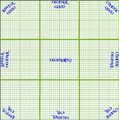 An alignment chart for gradient alignment tracking.
 -
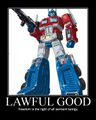 Thus spake the whitest of all trucker's hats: freedom is the right of all sentient beings.
 -
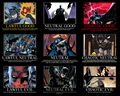 Batman is a complex guy
 -
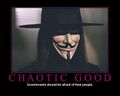 "We are legion!"
 -
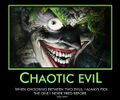 Cue Mark Hamill laughter.
 -
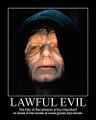 "Unlimited powah!" (Palps is more Neutral Evil, but whatever)
 -
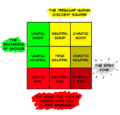
-
 Of course, idiocy is not exclusive to specific moral conundrums.
 -
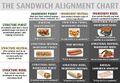
We are all agreed on this then: A rock is not a sandwich.Somebody mentioned Skub? -
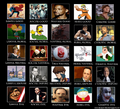 Yes, someone decided to make it more complicated.
 -
 By the emperor...why? And that isn't even the biggest variant!
 -
Alignment charts: Not just for sandwiches and people anymore!


External Links[edit | edit source]
- ↑ Although there's a famous chart arguing that Batman has occupied every alignment.