The Manual of the Planes: Difference between revisions
1d4chan>Biggus Berrus Added categories |
1d4chan>Biggus Berrus The Astral Dreadnought appeared in the Planescape Monstrous Compendium II. |
||
| Line 1: | Line 1: | ||
Ideally, in [[Dungeons & Dragons]] your players will be leveling up and able to beat the living shit out of anything on God's green Earth... or [[Greyhawk|Oerth]], or [[Dragonlance|Krynn]], whatever. You've been using stuff like evil wizards summoning [[Tanar'ri|demons]], or fire [[elemental]]s, or djinni, and maybe your players are gonna get the idea that they're gonna close the Hellmouth from the other side. | |||
Well, [[Wizards of the Coast]] has a [[splatbook]] for everything. | |||
The first book gave a chapter on fluff, settings info, survival skills and random encounters for the alternate dimension in the default "Great Wheel" cosmology of Advanced Dungeons & Dragons. | |||
[[AD&D]] 2nd edition didn't have it's own Manual of the Planes but it did have [[Planescape]], so we forgive them. | |||
[[D&D 3E|D&D 3rd edition]] got a new manual of the Planes, where it suggested some ways of having alternate cosmologies, and had some prestige classes just for those who travel planes often. It spent most of its text giving details on what the geography and afterlife is like in each of the Outer Planes, and gave monster manual entries (finally!) for denizens you would find only when traveling beyond your home plane. | |||
D&D | [[D&D 4e|D&D 4th edition]] broke with tradition and [[Points of Light|didn't use the "Great Wheel" cosmology, but still has alternate dimensions.]] [[Spelljammer|Those planes that were the residences of gods (good or evil) were now described as planets in the "Astral Sea" (read: outer space)]], while the elemental planes were mish-mashed together into the depths of a "Primordial Chaos" (read: Hell). Since player characters can achieve nigh-godlike powers with just the abilities described in the core rulebooks, planar travel is more likely to happen in order to find appropriate challenges. | ||
D&D 4th edition broke with tradition and didn't use the "Great Wheel" cosmology, but still has alternate dimensions. | |||
== Gallery == | == Gallery == | ||
Revision as of 23:36, 19 March 2015
Ideally, in Dungeons & Dragons your players will be leveling up and able to beat the living shit out of anything on God's green Earth... or Oerth, or Krynn, whatever. You've been using stuff like evil wizards summoning demons, or fire elementals, or djinni, and maybe your players are gonna get the idea that they're gonna close the Hellmouth from the other side.
Well, Wizards of the Coast has a splatbook for everything.
The first book gave a chapter on fluff, settings info, survival skills and random encounters for the alternate dimension in the default "Great Wheel" cosmology of Advanced Dungeons & Dragons.
AD&D 2nd edition didn't have it's own Manual of the Planes but it did have Planescape, so we forgive them.
D&D 3rd edition got a new manual of the Planes, where it suggested some ways of having alternate cosmologies, and had some prestige classes just for those who travel planes often. It spent most of its text giving details on what the geography and afterlife is like in each of the Outer Planes, and gave monster manual entries (finally!) for denizens you would find only when traveling beyond your home plane.
D&D 4th edition broke with tradition and didn't use the "Great Wheel" cosmology, but still has alternate dimensions. Those planes that were the residences of gods (good or evil) were now described as planets in the "Astral Sea" (read: outer space), while the elemental planes were mish-mashed together into the depths of a "Primordial Chaos" (read: Hell). Since player characters can achieve nigh-godlike powers with just the abilities described in the core rulebooks, planar travel is more likely to happen in order to find appropriate challenges.
Gallery
-
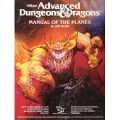 Manual of the Planes AD&D Cover
 -
 Planescape map from AD&D 2nd
 -
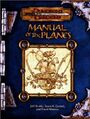 Manual of the Planes 3e Cover
 -
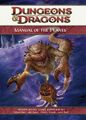 Manual of the Planes 4e Cover


