Batman

|
This is a /co/ related article, which we allow because we find it interesting or we can't be bothered to delete it. |
"Batman's rich history allows him to be interpreted in a multitude of ways. To be sure, this is a lighter incarnation, but it's certainly no less valid and true to the character's roots than the tortured avenger crying out for mommy and daddy."
- –
Bat-MiteBruce Timm, Batman: The Brave and the Bold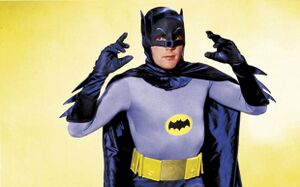
I am vengeance. I am the night. I am Batman!

Batman is a comic-book superhero with a chiropteran theme from DC Comics, originally created by Bob Kane and Bill Finger. He was once Bruce Wayne, child of wealthy philanthropists, but while his family were out and about, his parents were killed by a mugger. Heartbroken and filled with guilt, he traveled the world, studying criminology and martial arts; when he returned home to Gotham City, he used his inherited fortune (and/or company, depending on the era) to become a ninja-esque crime-fighter. Knowing from his studies that criminals are generally a superstitious and cowardly lot, he developed the costume and persona of the Batman, a creature of the night who brings terror to the wicked. Among his many other titles are "The Dark Knight" and "The World's Greatest Detective," as his hand-to-hand combat skills are equaled by his polymath intellect, allowing him to (with a hefty dose of writer favoritism) stand up to the likes of Superman and win.
Major Incarnations
Batman has been around for a long time, old enough that he was invented as a direct reaction to Superman's obscene popularity. Generations of comics creators have tried to put their own spins on the character make their names and keep the franchise fresh, and they've mostly succeeded; the idea of a vigilante who's been hurt by the criminal element and wants to make it hurt back without becoming what he hates is so mythically resonant that it takes serious effort to screw it up, not that some people haven't tried.
- Golden Age: The original version of Batman was ripped straight from the pulps, a vigilante in the vein of the Phantom, the Shadow and the Spider. He would kill criminals without remorse and fought crime rings, mad scientists and vampires, but at the same time this version introduced his trademark utility belt and bat-themed gadgets. This is also the era that introduced Robin, Alfred, the Joker (initially just a serial killer with a gimmick) and Catwoman.
- Silver Age: After World War II Batman became increasingly silly and tilted towards science fiction, following industry trends and as a reaction to the widespread moralfagging of the 1950s, though Batman had already gained his no-killing-no-guns signature back in 1942. This is the era that gave us many of the sillier elements of Batman's rogues gallery, including the Riddler, Poison Ivy, and generally everything that people associate with Batman other than Bane, Harley Quinn and Ra's al-Ghul. Immortalized in the 1966 TV show starring Adam West; ABC bought the TV rights expecting a mildly serious thriller, but the producer committed the classic blunder known as "doing the research" and realized it could only work as a self-parody. Work it did, singlehandedly causing a brief boom in comics sales in the late 60s and making the character a household name. This Batman is a jovial individual, a father figure to Robin and (at least in the TV series) a duly deputized instrument of the law who just happens to cavort around dressed like a bat, with a gadget for every situation the writers can come up with.
- Dark Age: After the TV show Batman became synonymous with camp and generally failed to find an audience, even when new writers tried to bring the character back to his darker roots. That changed with The Dark Knight Returns, a limited series by infamous edgelord Frank Miller that cast Batman as a bitter old man coming out of retirement to save a decayed, almost cyberpunk Gotham from itself. It was an instant hit that probably saved the character from obscurity, but everyone tried to copy it without any maturity (cf. Tolkien) and it became a breakpoint for the Dark Age of comic book writing. This Batman is perpetually haunted by his failures and guilt over the deaths of his parents, taking out his frustrations on the criminal element and even his allies as much as he fights for justice. At the same time, several character-defining moments came out of this period, including The Killing Joke (which turned Joker from a bucolic "gimmick villain" into the monster he is today and violently ended Barbara's run as Batgirl) and Knightfall, which introduced Bane, the last new Batman villain to really stick in the public consciousness. This Bane is a true criminal mastermind rather than the brute he's often painted as, though he's still a big guy (for you). This is also the age of Tim Burton's Batman movie, which actually rescued the character from his campy image and paved the way for...
- The Animated Series: While the comics industry was going off the rails and wallowing in grimderp, Warner Bros. was redefining Batman in their own way with this animated gem. At a time when cartoons were almost universally sappy, poorly written claptrap, an executive team led by Bruce Timm and studio president Jean MacCurdy leveraged the success of the Tim Burton movie to pitch a series that featured actual violence and a grim, Art Deco-inspired aesthetic while remembering to give characters enough depth to be interesting. A ton of stuff you thought came from the comics was actually invented here, including Harley Quinn, Harvey Dent's backstory before becoming Two-Face, and the iconic version of Mr. Freeze. This is also the series that first flirted with the idea of "Bruce Wayne" being Batman's alter ego rather than the opposite, brilliantly conveyed by voice actor Kevin Conroy's use of Batman's deep gravelly voice when Bruce is by himself.
- Modern Age: In the 2000s and later Batman has been taken in a dozen different directions, partially because the studios know spinoffs work now and partially because of massive creative churn at DC after the bottom fell out of the comics market. Grant Morrison and Jeph Loeb turned him into the infamous "Bat God" because they took the preptime meme seriously and started pandering to people who use fiction to play "my dad can beat up your dad" writ large, while other writers subjected side characters to an escalating conga line of FATAL level shit because The Killing Joke was so well received. The film series directed by Christopher Nolan took the gritty Batman from The Dark Knight Returns and projected it to the beginning of his career, which gave DC Comics movies some credibility until the plane scene happened. Batman: The Brave and the Bold brought back the best parts of the Silver Age and tempered them with the self-awareness that comes from writing this crap for decades, giving us a Batman who could literally call his fists "the hammers of justice" and not come off as a parody. Joker proved the most iconic member of Batman's rogues could stand on his own with a good script, not to mention scare the shit out of mainstream journos when half the Internet declared >he's literally me after seeing Joaquin Phoenix go postal.
- Evil Batman: When Batman is hyped up as Tha Best Evar, an evil Batman has to be even scarier, right? We've had mirror universe versions like Owlman, vampire Batmen (in multiple cartoons, even), other people putting on the cowl only to Go Too Far Konrad Curze style, and more besides. The ultimate (for all the wrong reasons) evil Batman has to be The Batman Who Laughs: all the intellect of Batman, all the murderous insanity of the Joker, and the plot armor of both combined.
Allies
Despite usually being portrayed as a socially awkward and bitter loner, Batman ironically has the largest "family" of trainees and spin-off heroes in DC comics, if not in comics as a whole:
- Alfred Pennyworth: Bruce Wayne's butler, ala Zorro's Bernardo but capable of hearing and speech. At first just a butler with a vague background in intelligence who figured out the secret himself, post-Crisis he raised Bruce after Thomas and Martha's death. His past has gradually been expanded since to the point he might as well be a retired James Bond. Occasionally plays Batman when Bruce needs to in two places at once, and often the voice of reason due to not being motivated by childhood trauma. Whenever Robin isn't part of the story, Alfred plays a much larger role so that Batman has a "Watson" figure to talk to for the benefit of the audience.
- Robin: The original Kid Sidekick, a brightly colored and cheerful youth who was introduced to add some contrast to the dark and brooding Batman. There have been at least five official Robins in mainstream continuity. While child sidekicks that aren't a character's biological child have largely gone away, Batman gets to keep his due how ancient and iconic Robin is.
- Dick Grayson: The original and for most people the most iconic Robin. Orphaned son of a circus acrobat family called the Flying Graysons, adopted by Batman and then became the first Robin. Eventually split to become an adult superhero named Nightwing. Founder of the Teen Titans. The greatest acrobat in the "Batfamily", fan-favorite and bigger ladies' man than Batman proving "charm > money".
- Jason Todd: The second Robin, a former teen delinquent with a vicious streak who flirted with killing more than once. Fans found him unlikable and Batman writer Jim Starlin found the kid-sidekick idea absurd, so they had Joker beat him to a pulp with a crowbar and staged a call-in vote (inspired by an SNL sketch of all things) so the fans would take the heat. ("Kill" won by just 72 votes, and anyone who's been on 4chan long enough knows how easy polls are to rig.) Then he was brought back from the dead as a vengeful vigilante called the Red Hood, who is kind of like DC's Punisher, except he doesn't have anybody on the staff trying to push him as a Humanity Fuck Yeah badass like Punisher does.
- Tim Drake: The third Robin, who originally was not an orphan and instead saw his Robin-ing as a part-time thing to snap Batman out of his funk after Jason Todd was killed. Then his parents were killed and he became Batman's ward and permanent Robin. Founder of the Young Justice team. Was rebooted slightly in the New 52, where the biggest change was that he always called himself by the seperate identity of Red Robin (yumm) whilst sidekicking for Batman before going independent to Drake. Voted most likely to inherit the role of "World's Greatest Detective", able to deduce Batman's secret identity from his introduction.
- Stephanie Brown: Notable as the only female teen sidekick of Batman to go by Robin instead of Batgirl. Highly controversial becase she was treated with incredible unfairness by Batman, including literally only being recruited in an attempt to make Tim Drake jealous and return to being Robin, and then seemingly killed off.
- Damian Wayne: The most recent Robin, and Batman's biological son conceived with long time antagonist/love interest Talia al'Ghul, causing him to be raised by the murderous League of Assassins. Has a much more brutal attitude as a result, and is basically Jason 2.0 albiet with a much better excuse for being an asshole. You either love or hate the little shit.
- Batwoman: A female counterpart to Batman introduced in the Silver Age after some schmuck famously accused Batman and Robin of promoting homosexuality and pedophilia (though the way "ambiguously gay duo" has been memed up in more recent years suggests it was closer than some of his other crackpot claims). Katherine "Kathy" Kane was introduced as a woman so in love with Bruce Wayne that, having figured out he was Batman, she created her own female counterpart persona to his to try and woo him. Got killed off in the Bronze Age, practically as a footnote, and now the name is mostly known from the animated movie Mystery of the Batwoman. Was brought back in 2006, reinvented as a lesbian soldier who was dishonorably discharged for her sexuality (which dates her immediately, since "don't ask, don't tell" was only US Army policy for around 20 years) and took up crime-fighting.
- Batgirl: Almost as long-running as the Robins have been the Batgirls, which are teenage female sidekicks of the Bat-family.
- Betty Kane: The original Batgirl (or "Bat-Girl", as she was called), she was the niece of Kathy Kane, aka Batwoman, and was introduced as DicK Grayson's would-be love interest. Dropped in the Bronze Age alongside her aunt, and hasn't really come back since.
- Barbara Gordon: The second Batgirl, the first to use the name without the hyphen, and the one everybody actually remembers. Daughter (sometimes niece) of Batman's ally, Police Commissioner James Gordon; created her own parody of Batman's costume for a masquerade ball, ended up using it and her acrobatic & judo training to take down a bunch of crooks who had attacked it. Thrilled by it all, she took up vigilantism herself. Had the longest run of any Batgirl, but was crippled by being shot in the back by the Joker in the 80s and became the heroic hacker and information broker Oracle. Took up the cowl again after getting her spine healed in 2011 in one of the rare examples of comic book science not being ignored outside of the conflict of the issue.
- Helena Bertinelli: A mobster's daughter turned Punisher-style vigilante known as the Huntress. She briefly took up the Batgirl mantle during the "No Man's Land" event, before Batman forced her to go back to being Huntress because he couldn't stomach her willingness to use lethal force.
- Cassandra Cain: Generally considered the second "real" Batgirl after Barbara Gordon. A mute assassin's daughter whose father brought her up to read body language with unparalleled skill, only for this to cause her first kill to so traumatize her that she foreswore killing ever again. Batman took her under his wing out of sympathy, making her the most Robin-like of the Batgirls.
- Commissioner Gordon: Gotham Police Chief, and one of the few people from the general public that Batman regularly interacts with (as Batman, anyway). Gordon's one of the few competent and noncorrupt detectives in the city, though his actual abilities tend to vary; in some cases guessing Batman's true identity but keeping it to himself since he knows how much the city needs him. Usually he's unaware that Barbara is Batgirl.
- Lucius Fox: CEO of Wayne Enterprises, who takes care of the day-to-day business dealings to free up Bruce for his caped crusades. Depending on the story, Lucius is also actively involved in the Batman side of things, usually acting as Batman's version of Q and providing him with many of his gadgets.

- Superman: Even in pre-JLA stories, Batman and Superman would collaborate (and sometimes fought each other) several times, representing the two extremes of superhero; one who's an all-powerful superhuman, the other who's just an ordinary human but highly skilled with incredible intellect. Batman and Superman usually figure out each other's identities pretty quickly on their first meeting, and tackle problems that neither can handle on their own; they usually have a good personal relationship despite their obvious differences. In stories where the two share spotlight, Batman takes on more of a "detective" role so as not to strain disbelief by having him fighting the same things as Superman.
Rogues Gallery
- The Joker: You know who this guy is. Originally inspired by Conrad Veidt's appearance in the drama The Man Who Laughs, the Joker's backstory is in constant flux (described as "multiple-choice" by the man himself) but boils down to a man down on his luck who fell into a vat of chemicals, giving him a permanent clown-like face and driving him insane. Reinvented almost more often than Batman himself; he's been a Fantomas-like mastermind, a true "Clown Prince of Crime" with funhouse-themed gadgets and capers that seem more like pranks, a sadistic monster, and most recently a downtrodden nihilist seeking revenge on society.
- Harley Quinn: The Joker's henchwench from the 1990s animated series who proved popular enough to stitch into the comics. A former psychiatrist who made the mistake of trying to rehabilitate the Joker, he twisted her around his little finger and turned her into his lovestruck slave. And for a doctor, she's surprisingly acrobatic and tough in a fight. Notable for the fact that, from her first appearance in what was nominally a kids show, her relationship with the Joker has always been creepy and abusive. This was once celebrated as a more intimate window to the Joker's insanity, it proved far too interesting for the modern comics industry, and she was made more violent and separate from the Joker in the 2010s in an attempt to copy the blockbuster Deadpool movie. Depending on the continuity, she's either implicitly bisexual, very explicitly bisexual, or an out-and-out lesbian; this was hinted at going back to the 90s, and the original cartoon's "Harley and Ivy" scenes are masterpieces in in saying it without saying it.
- Catwoman: A cat burglar (duh) who regularly both goes against Batman (when stealing) and works with him (when they're after the same crook). For a long time, the closest thing Bats ever had to an official love interest, since she married him, became his crimefighting partner, and had a daughter who grew up to become the costumed superheroine Huntress in a parallel universe back before the 2000s, and in the 2010s he and she almost got married in a big comic event before fan backlash forced DC to actually let them tie the knot... in yet another spinoff multiverse because it's not allowed to happen in the mainline one.
- The Penguin: Oswald Cobblepot is a wannabe crime lord taking his name from his short, waddling gait and old-fashioned tuxedo costume. In some stories he's just the black sheep of some old money family, while in the film Batman Returns and several stories after that he's also a deformed mutant with flipper-like fingers; in any case he's defined by his use of trained birds, gadget-filled umbrellas, and being relatively sane by supervillain standards. In modern comics he gets out of supervillainy and turns to more mundane organized crime, working as a racketeer and info broker from a nightclub called the Iceberg Lounge.
- Mr. Freeze: "This is how I'll always remember you. Surrounded by winter, forever young, forever beautiful. Rest well, my love; the monster who took you from me will soon learn that revenge is a dish best served cold." After brief stints as a mad scientist and an aggressively German bank robber in other media, the Animated Series rewrote this space-suited villain with a tragic backstory so awesome it immediately displaced the originals. Victor Fries was a scientist specializing in cryogenics until a lab accident mutated him into a being who can only survive at sub-zero temperatures. Obssessed with reviving his terminally-ill wife Nora from suspended animation and getting revenge on whoever caused the accident, Fries builds a cryogenic suit to keep himself alive and weaponizes his freezing technology to strike back at his enemies. He's set apart from the other Batman villains by being calculating and filled with cold rage rather than manic, and often lashes out in nihilistic spite in stories where he succeeds in curing Nora only to be rejected for what he's become. He also had a rather cool appearance in the otherwise-awful Batman & Robin movie, where he was played by the Governator himself.
- Poison Ivy: Pamela Isley is a botany expert turned ecoterrorist with a natural immunity to all toxins, making her a natural poisoner of Gotham's elite industrialists; post-Crisis this was upgraded into being an actual plant person with nature-themed superpowers. Frequently characterized as a seducer in the vein of the psuedo-mythical Alraune, complete with perfumes or pheromones powerful enough to count as mind control. When that doesn't cut it she can fall back on her botany expertise and plant powers, turning trees into something out of Catachan and Venus flytraps into a passable imitation of one mean green mother from outer space. After the Animated Series she became associated with Harley Quinn, as both of them tend to have big issues with men and aggressive personalities.
- The Mad Hatter: Jervis Tetch is a quite wacky old chap who was obssessed with Alice in Wonderland as a child, became a neuroscientist, and discovered a way to control people's minds with easily concealed microchips. Because this is a comic book, he promptly snaps and becomes a super-criminal styled after the classic Mad Hatter instead of doing something sensible like joining the Illuminati. While he's a pretty generic mind-controller in the comics outside of the gimmick of putting his devices in old-timey price cards and hat bands, his portrayal in the animated series is notable for being a textbook case of "incel rage" decades ahead of its time: he falls in love with an Alice-like secretary, tries to catch her on the rebound by using his devices to orchestrate a "perfect" date for her, only to be shattered when she goes for Chad Thundercock instead. This version is more of a tragic figure; he has the presence of mind to not go straight to mind-controlling his "Alice" from the beginning, and in subsequent stories Tetch only goes after Batman because he's a constant reminder of his ruined life.
- The Riddler: Perhaps the most "Silver Age" of the enduring Batman villains, the Riddler is a smug asshole obsessed with brainteasers who sees Batman (being "The World's Greatest Detective") as his only peer. His habit of leaving clues to his crimes for do-gooders to solve is actually a form of obsessive-compulsive disorder, explaining why he constantly sabotages himself with impractical schemes and fallible deathtraps. The writers tend to alternate between treating him as a genuine challenge for Batman's intellect and a prancing egomaniac whose most dangerous aspect is his terrible fashion sense.
- Bane: The man who broke the Bat. Taken to a prison island at an early age for his father's crimes, Bane was raised by his fellow political inmates (making him a criminal version of pulp icon Doc Savage) before being used as a test subject for the experimental "super-steroid" called Venom. Now totally fucking ripped, he breaks out and decides his next step is to defeat Batman and rule Gotham, having been haunted by a fear of bats his whole life and with no ties to lawful society. Realizing Batman is still human with human limits, he manipulates Gotham's villains into wearing the Bat down before ambushing him outside the Batcave, breaking Batman's spine over his knee in one of the most iconic images of modern comics. After being defeated by a recovered Batman he continues to strive for a foothold in Gotham's underworld, occasionally taking time off to brutalize anyone trying to sell Venom as an illegal drug. How much of his super-strength comes from Venom varies; initially he used it continuously to stave off withdrawal and was helpless without it, but in later stories he goes cold turkey and is still a big guy without the Venom. Typically flavored as Latin American and dressed as a luchador, signaling that if you tried to take his mask off it would be extremely painful (for you).
Batman Miniatures Game
The Batman Miniature Game, by Knight Models, is a skirmish game in which players create bands based on major characters and factions. They attempt to take objectives, or just knock out everyone on the opposite team.
Appearance in Other RPGs and Board Games
There's been more than one attempt to adapt the "DC Universe" into a tabletop RPG or board game. Guess which hero shows up in just about all of them? And then there's the many, many, many Batman clones in "original" Superhero RPG Settings (Superman has more clones, but only because he's the most iconic Superhero).
Other /tg/ Relevance
- There exists a meme that "Batman could take anyone, with enough prep time" (in the comics, among other places, he's defeated a mind-controlled Superman several times). Thus, among other things, the "Batman Wizard" of Dungeons & Dragons 3rd Edition, who had a spellbook large enough to have a spell for every situation... presuming he had time to prepare spells. That being said, the meme doesn't take into account that, while definitely someone who goes into fights with some preparation, he's also extremely good at improvisation when the situation demands it.
- Responsible, almost single-handedly, for players wanting to play "a guy without superpowers who can fight on par with the guys with powers" in Supers RPGs.
Gallery
-
 The Joker is famous for his ability to put on a cool face no matter the situation.
 -
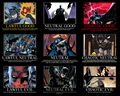 Batman is a morally complex fellow.


See Also
- Superman, Batman's most frequent non-"Bat-family" butt buddy.
- Konrad Curze, Primarch of the Night Lords. The living (for a while, at least) answer to a question what if Batman and Punisher had a lovechild. Very much in favor of terrorizing enemies to soften them up (or even drive them to kill themselves).
- Sentinels of the Multiverse, being a loving tribute to all manner of comics, features the Wraith, a stealthy gadget-based superheroine who is both close friends with the local legacy equivalent and fighting like a ninja. Really, the major difference between the two is that Maia is a hot chick rather than a manly slab of beefcake and that the Wraith is forever in her 20s rather than her 30s and doesn't really experiment with sidekicks.