Paladin: Difference between revisions
No edit summary |
|||
| Line 1: | Line 1: | ||
[[Image:Colbert paladin.jpg|thumb]] | [[Image:Colbert paladin.jpg|thumb|The typical Paladin, note the colors, and the symbol of the eagle, an important core of their faith]] | ||
[[Image:Paladin_button.png|thumb|PRO DM SKILLZ]] | [[Image:Paladin_button.png|thumb|PRO DM SKILLZ]] | ||
[[Image:Paladins.jpg|thumb|Yeah, this pretty much sums it up.]] | [[Image:Paladins.jpg|thumb|Yeah, this pretty much sums it up.]] | ||
Revision as of 13:13, 21 April 2010


Born to raze hell
Paladins are a class from Dungeons and Dragons. They are divine warriors of a somewhat more martial bent than Clerics, receiving a variety of powers generally focused around smiting the enemies of their god. Many a ficticious maiden has benefited from a Paladin's Laying On of Hands. Until 4th Edition came out, core Paladins were required to be Lawful Good and lost their powers if they strayed from this alignment, or violated the Paladinly Code of Conduct. In 4th Edition, not only was the alignment restriction removed, but also the mechanic for power loss, instead replaced with vague threats of the other faithful of the paladin's religion seeking him out to administer chastisement for his failings. 4th Edition paladins have a different alignment restriction, they must be the same alignment as their deity.
Unfortunately, the possibility of Paladins in old editions to fall is often abused by dickish DMs, who seem to derive some sort of twisted pleasure out of forcing a player's Paladin into hideously arbitrary situations where any choice they take results in falling from grace and the stripping of powers. Even otherwise reasonable DMs seem to turn into complete dicks when presented with a chance to make a paladin player's life a misery. As a result, many avoid playing paladins entirely due to bad experiences with evil DMs.
However, fallen paladins who turn to evil had the option to multiclass into the evil prestige class Blackguard, which receives bonus abilities if the character has levels of Paladin.
-

-
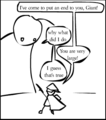 That's what paladins actually believe


