GURPS: Difference between revisions
No edit summary |
No edit summary |
||
| Line 11: | Line 11: | ||
The '''Generic Universal RolePlaying System''', usually shortened to '''GURPS''', is a [[RPG|roleplaying game]] made by [[Steve Jackson Games]]. It has loads of numbers and expansion books. GURPS is the quintessential universal system; it is so flexible that you can bend it in half, fold it through itself, and then tie it in a 4-dimensional knot. It is the paragon of the [[simulationist]] category of games. All simulationist games since GURPS secretly aspire to kill GURPS and wear its skin while drinking the blood of its delicious heart. Its detail is surpassed by [[I.C.E.]]'s [[Rolemaster]] series, but GURPS doesn't suffer from the Table Within a Table Within a Table Within a FUCK YOU problem inherent in the game of Rolemaster. Whenever someone asks /tg/ which system to use for a campaign, there will ''always'' be some autist there to recommend GURPS, regardless of how appropriate it actually is. | The '''Generic Universal RolePlaying System''', usually shortened to '''GURPS''', is a [[RPG|roleplaying game]] made by [[Steve Jackson Games]]. It has loads of numbers and expansion books. GURPS is the quintessential universal system; it is so flexible that you can bend it in half, fold it through itself, and then tie it in a 4-dimensional knot. It is the paragon of the [[simulationist]] category of games. All simulationist games since GURPS secretly aspire to kill GURPS and wear its skin while drinking the blood of its delicious heart. Its detail is surpassed by [[I.C.E.]]'s [[Rolemaster]] series, but GURPS doesn't suffer from the Table Within a Table Within a Table Within a FUCK YOU problem inherent in the game of Rolemaster. Whenever someone asks /tg/ which system to use for a campaign, there will ''always'' be some autist there to recommend GURPS, regardless of how appropriate it actually is. | ||
The basic premise behind the system is that you create your character and customize all of his abilities using points that you get both at creation and as your character progresses. There are | The basic premise behind the system is that you create your character and customize all of his abilities using points that you get both at creation and as your character progresses. There are assloads of physical, mental, and social defects that can be used to get more character points to channel right back into your advantages. It uses the d6 exclusively, with most checks being 3d6 and [[roll under]]. This can be augmented in difficulty by increasing or decreasing the target numbers. A roll of a 3 or 4 is a critical success, while an 18 is always a critical failure. SJG put out a free .pdf synopsis of the rules called "[http://www.sjgames.com/gurps/lite/ GURPS Lite]", which is enough to play a barebones version of the game. | ||
[[Image:KALI_MAAAAA.JPG|thumb|left|KALI-MAAAAAA!]] | [[Image:KALI_MAAAAA.JPG|thumb|left|KALI-MAAAAAA!]] | ||
| Line 30: | Line 30: | ||
=== Notable Supplements === | === Notable Supplements === | ||
*'''Powers''': Almost mandatory for any campaign where PCs have any kind of supernatural abilities. The magic system of GURPS core quite frankly sucks, so you really want either this or Thaumatology below if you're playing more than hard realism. | *'''Powers''': Almost mandatory for any campaign where PCs have any kind of supernatural abilities. The magic system of GURPS core quite frankly sucks, so you really want either this or Thaumatology below if you're playing more than hard realism. | ||
*'''*-Tech''': Weapons and gadgets and gear. Unlike most splats of this nature (looking at you, [[Cyberpunk 2020]]) these books actually spend some time helping you think through the ''implications'' of the various gadgets they introduce for your campaign, not just acting as a shopping list for your local [[munchkin]]. Series includes High-Tech (modern and near-future), Low-Tech (Stone Age to Early Modern), Bio-Tech (organic technology including [[PROMOTIONS|sex bioroids]] and that living spaceship from Lexx), and Ultra-Tech (bullshit sci-fi stuff). Fair warning: Ultra-Tech is balanced for space opera flavor, ''not'' compatibility with the rest of the system, so if you try to use it in the same campaign as High-Tech or corebook equipment without tweaks bad things will happen. | *'''*-Tech''': Weapons and gadgets and gear porn, oh my. Unlike most splats of this nature (looking at you, [[Cyberpunk 2020]]) these books actually spend some time helping you think through the ''implications'' of the various gadgets they introduce for your campaign, not just acting as a shopping list for your local [[munchkin]]. Series includes High-Tech (modern and near-future), Low-Tech (Stone Age to Early Modern), Bio-Tech (organic technology including [[PROMOTIONS|sex bioroids]] and that living spaceship from Lexx), and Ultra-Tech (bullshit sci-fi stuff). Fair warning: Ultra-Tech is balanced for space opera flavor, ''not'' compatibility with the rest of the system, so if you try to use it in the same campaign as High-Tech or corebook equipment without tweaks bad things will happen. | ||
*'''Thaumatology''': Supplement to the supplement GURPS Magic and your one-stop shop for just about every kind of magic system humans have come up with so far, from runes to rituals to voodoo | *'''Thaumatology''': Supplement to the supplement GURPS Magic and your one-stop shop for just about every kind of magic system humans have come up with so far, from runes to rituals to voodoo. | ||
*'''Cabal''': GURPS' answer to the "[[Mage: The Ascension|occult societies plumbing the cosmos]] [[Vampire: The Masquerade|and lording it over the normals for kicks]]" genre, courtesy of occult-horror guru Kenneth Hite. Takes the otherwise bog-standard Kabbalah template and blends in elements of Golden Dawn to build an all-killer-no-filler cosmology and magic system. Totally clowns on the World of Darkness by making all the things that go bump in the night fit into a cohesive whole, even if the GM still has to do a lot of legwork. | *'''Cabal''': GURPS' answer to the "[[Mage: The Ascension|occult societies plumbing the cosmos]] [[Vampire: The Masquerade|and lording it over the normals for kicks]]" genre, courtesy of occult-horror guru Kenneth Hite. Takes the otherwise bog-standard Kabbalah template and blends in elements of Golden Dawn to build an all-killer-no-filler cosmology and magic system. Totally clowns on the World of Darkness by making all the things that go bump in the night fit into a cohesive whole, even if the GM still has to do a lot of legwork. | ||
*'''[[GURPS Infinite Worlds]]''': The core setting for fourth edition. Technically the fourth edition version of '''GURPS Time Travel''', but nobody cares at this point. Almost every other GURPS book (big exception: Transhuman Space) has an excuse for you to buy it tucked somewhere in the Infinite Worlds setting | *'''[[GURPS Infinite Worlds]]''': The core setting for fourth edition. Technically the fourth edition version of '''GURPS Time Travel''', but nobody cares at this point. Almost every other GURPS book (big exception: Transhuman Space) has an excuse for you to buy it tucked somewhere in the Infinite Worlds setting. | ||
*'''[[Reign of Steel]]''': Essentially the setup for ''I Have No Mouth, And I Must Scream'', except instead of just nuking everything AM makes 17 copies of itself that it's subsequently forced to share the planet with after human civilization goes bang. There's also a number of resistance cells taking the fight to the machines Terminator style. | |||
*'''[[Technomancer]]''': Urban fantasy du jour. The Trinity tests set magic loose in the world, and humanity does what it does best: systematize it, weaponize it and commercialize it. The US breeds dragons for military use, Stalin is a lich, magical elixirs are sold at the corner drugstore and there are killer penguins that hate you in Antarctica. Some of its assumptions haven't aged well and there are a number of spells that might as well be named "[[Magical realm|Fulfill Obscure Fetish]]" but overall it does a good job of considering the long-term implications of magic in the modern world while still providing good adventure fodder. | |||
*'''[[ | |||
*'''[[Technomancer]]''': Urban fantasy du jour. The Trinity tests set magic loose in the world, and humanity does what it does best: systematize it, weaponize it and commercialize it | |||
*'''IOU - Illuminati University:''' Once upon a time, Steve Jackson Games ran an ISP and BBS, back when the internet was a small enough thing that an RPG company could do that and not immediately go bankrupt. The elegan/tg/entlemen who used the BBS wrote up a parody setting for play-by-post games [[/tg/ gets shit done|and Steve thought it was good enough to publish]]. Illuminati University is like every other college you've been to, except it sits on top of a nexus between pretty much every reality there is. This means the entire place effectively has the Weirdness Magnet disadvantage, and you can take classes in such things as World Creation, [[Paranoia|THE]] Computer Science, and Dirty Tricks. Features lots of amazing art from Phil Foglio. And before you ask, you're not cleared to know what the O stands for. | *'''IOU - Illuminati University:''' Once upon a time, Steve Jackson Games ran an ISP and BBS, back when the internet was a small enough thing that an RPG company could do that and not immediately go bankrupt. The elegan/tg/entlemen who used the BBS wrote up a parody setting for play-by-post games [[/tg/ gets shit done|and Steve thought it was good enough to publish]]. Illuminati University is like every other college you've been to, except it sits on top of a nexus between pretty much every reality there is. This means the entire place effectively has the Weirdness Magnet disadvantage, and you can take classes in such things as World Creation, [[Paranoia|THE]] Computer Science, and Dirty Tricks. Features lots of amazing art from Phil Foglio. And before you ask, you're not cleared to know what the O stands for. | ||
*'''Transhuman Space:''' Welcome to the future. A | *'''Transhuman Space:''' Welcome to the future. A hard-SF transhumanist setting that doesn't insult your intelligence and dodges the axe-grinding and grimderp associated with [[Eclipse Phase]]. ''Lots'' of background info and research involved, and some of it (especially the memetics section) has turned out to be terrifyingly prescient. | ||
*'''[[Banestorm]]''': Welcome to <strike>Erf</strike> <strike>[[Greyhawk|Oerth]]</strike> Yrth. Ages ago this was a fairly standard fantasy setting until some elves decided to be fantasy-Nazis and tried a ritual to kill all orcs everywhere. Instead it nuked a good chunk of the continent and ''The Wizard of Oz''-ed all the stock fantasy races that weren't living on Yrth already-- including humans. A thousand years later and Yrth is the only fantasy world where dolphins talk, goblins pass the collection plate around after Sunday Mass and elves are fading for reasons that are 100% their own fault instead of just because Tolkien did it. Also full of random things like hang-gliding orcs who revere "[[wikipedia:Amelia_Earhart|the Air Heart]]" as a culture hero. | *'''[[Banestorm]]''': Welcome to <strike>Erf</strike> <strike>[[Greyhawk|Oerth]]</strike> Yrth. Ages ago this was a fairly standard fantasy setting until some elves decided to be fantasy-Nazis and tried a ritual to kill all orcs everywhere. Instead it nuked a good chunk of the continent and ''The Wizard of Oz''-ed all the stock fantasy races that weren't living on Yrth already-- including humans. A thousand years later and Yrth is the only fantasy world where dolphins talk, goblins pass the collection plate around after Sunday Mass and elves are fading for reasons that are 100% their own fault instead of just because Tolkien did it. Also full of random things like hang-gliding orcs who revere "[[wikipedia:Amelia_Earhart|the Air Heart]]" as a culture hero. | ||
Revision as of 02:53, 23 January 2026
| GURPS | ||
|---|---|---|
 |
||
| RPG published by Steve Jackson Games |
||
| Rule System | 3d6 Roll Under | |
| Authors | Steve Jackson | |
| First Publication | 1986 | |
The Generic Universal RolePlaying System, usually shortened to GURPS, is a roleplaying game made by Steve Jackson Games. It has loads of numbers and expansion books. GURPS is the quintessential universal system; it is so flexible that you can bend it in half, fold it through itself, and then tie it in a 4-dimensional knot. It is the paragon of the simulationist category of games. All simulationist games since GURPS secretly aspire to kill GURPS and wear its skin while drinking the blood of its delicious heart. Its detail is surpassed by I.C.E.'s Rolemaster series, but GURPS doesn't suffer from the Table Within a Table Within a Table Within a FUCK YOU problem inherent in the game of Rolemaster. Whenever someone asks /tg/ which system to use for a campaign, there will always be some autist there to recommend GURPS, regardless of how appropriate it actually is.
The basic premise behind the system is that you create your character and customize all of his abilities using points that you get both at creation and as your character progresses. There are assloads of physical, mental, and social defects that can be used to get more character points to channel right back into your advantages. It uses the d6 exclusively, with most checks being 3d6 and roll under. This can be augmented in difficulty by increasing or decreasing the target numbers. A roll of a 3 or 4 is a critical success, while an 18 is always a critical failure. SJG put out a free .pdf synopsis of the rules called "GURPS Lite", which is enough to play a barebones version of the game.

GURPS' simulationist bent results in it being regarded as excessively complicated by many gamers, earning it the moniker "Generally Unplayable RolePlaying System". Using the third edition's vehicle creation system will make you want to eat your own face, and possibly devote the whole process to one or more elder gods. (Fourth Edition vehicles are just regular characters with extra stats.) Game Masters of the franchise experienced a downgrade in complexity following the release of Fourth Edition, but its inherent complexity still puts it behind Dungeons and Dragons in terms of ease of play.
However much of the complexity in GURPS is front-loaded. Character creation tends to take longer because of the staggering amount of detailed options. Forget just rolling a character like you would in D&D, you need to set aside a session to build one. That's the price you pay to evade Linear Build Quadratic EXP. Much of the complexity is also optional: the GURPS writers have always recommended leaving out the parts of the system you don't like, and various rules options (such as broader "bang skills" instead of the bloated default skill list) exist to streamline play further.
As the campaign progresses, the consistency and relative elegance of GURPS makes Dungeons and Dragons seem like a pile of kludge. The sandbox nature of character creation is appealing to players who have a concept of a character in their heads and want to reproduce it as faithfully as possible.
GURPS Books

Generally, anything can be done with just the base starter set of GURPS, some judicious homebrewing and a good head on your shoulders, but if you're too busy to do that the guys at SJ Games have it all figured out for you ahead of time. All of the books for GURPS simply tell you how to do things within the core system without the need to spend an additional day month to set up an innovative campaign, with a handful of new advantages and optional mechanics per book. For example, there is a book on Vampires. It explains how to create vampire characters and NPCs easily without dealing with the issues of balance and customization that bogs down new players. There is even a Dungeon Fantasy book you can get off E23, the Warehouse 23 PDF site, that allows you to play Dungeons and Dragons without the need to buy polyhedrals. Even if you don't actually want to use GURPS, the sheer amount of thought and research that goes into a typical GURPS book makes them well worth grabbing as a reference material.
One irritating fact you'll discover as you collect GURPS books is that although the system uses real-word measurements, the different authors have never agreed on whether they should use Imperial or metric units. Keep a conversion chart handy. Fortunately the main book includes one.
In the game's rather long lifespan, a truly impressive amount of settings and sourcebooks were made, including but not limited to Alpha Centauri, settings where you play Men In Black, Fantasy (including Banestorm, the original GURPS core setting), multiple SF settings (notable licensed one: GURPS Vorkosigan Saga), several books on conspiracies, historicals covering WW2, Ancient Rome, multiple other ancient cultures, joke settings (GURPS: IOU illustrated by Phil Foglio!), adaptations of a couple other games, (Notably the Classic World of Darkness (Vampire, Mage, and Werewolf), Traveller and Castle Falkenstein) and a couple books that are just collections of multiple settings. If you've got a group who feels like playing something different every month, GURPS has got you covered for the next decade or so. Most of these were written for third edition (aka "GURPS Classic"); the rules for which tend to be janky at best. It's strongly recommended that you convert these to fourth edition, which rolls in a number of sanity-saving rules patches from the Compendium sourcebooks and just makes playing anything that isn't mundane 100-point schmucks much easier. New stuff occasionally still comes out, but it's slowed to a trickle compared to the old days and what has been published is almost all genre sourcebooks converted from Classic in the most half-assed manner possible.
Notable Supplements
- Powers: Almost mandatory for any campaign where PCs have any kind of supernatural abilities. The magic system of GURPS core quite frankly sucks, so you really want either this or Thaumatology below if you're playing more than hard realism.
- *-Tech: Weapons and gadgets and gear porn, oh my. Unlike most splats of this nature (looking at you, Cyberpunk 2020) these books actually spend some time helping you think through the implications of the various gadgets they introduce for your campaign, not just acting as a shopping list for your local munchkin. Series includes High-Tech (modern and near-future), Low-Tech (Stone Age to Early Modern), Bio-Tech (organic technology including sex bioroids and that living spaceship from Lexx), and Ultra-Tech (bullshit sci-fi stuff). Fair warning: Ultra-Tech is balanced for space opera flavor, not compatibility with the rest of the system, so if you try to use it in the same campaign as High-Tech or corebook equipment without tweaks bad things will happen.
- Thaumatology: Supplement to the supplement GURPS Magic and your one-stop shop for just about every kind of magic system humans have come up with so far, from runes to rituals to voodoo.
- Cabal: GURPS' answer to the "occult societies plumbing the cosmos and lording it over the normals for kicks" genre, courtesy of occult-horror guru Kenneth Hite. Takes the otherwise bog-standard Kabbalah template and blends in elements of Golden Dawn to build an all-killer-no-filler cosmology and magic system. Totally clowns on the World of Darkness by making all the things that go bump in the night fit into a cohesive whole, even if the GM still has to do a lot of legwork.
- GURPS Infinite Worlds: The core setting for fourth edition. Technically the fourth edition version of GURPS Time Travel, but nobody cares at this point. Almost every other GURPS book (big exception: Transhuman Space) has an excuse for you to buy it tucked somewhere in the Infinite Worlds setting.
- Reign of Steel: Essentially the setup for I Have No Mouth, And I Must Scream, except instead of just nuking everything AM makes 17 copies of itself that it's subsequently forced to share the planet with after human civilization goes bang. There's also a number of resistance cells taking the fight to the machines Terminator style.
- Technomancer: Urban fantasy du jour. The Trinity tests set magic loose in the world, and humanity does what it does best: systematize it, weaponize it and commercialize it. The US breeds dragons for military use, Stalin is a lich, magical elixirs are sold at the corner drugstore and there are killer penguins that hate you in Antarctica. Some of its assumptions haven't aged well and there are a number of spells that might as well be named "Fulfill Obscure Fetish" but overall it does a good job of considering the long-term implications of magic in the modern world while still providing good adventure fodder.
- IOU - Illuminati University: Once upon a time, Steve Jackson Games ran an ISP and BBS, back when the internet was a small enough thing that an RPG company could do that and not immediately go bankrupt. The elegan/tg/entlemen who used the BBS wrote up a parody setting for play-by-post games and Steve thought it was good enough to publish. Illuminati University is like every other college you've been to, except it sits on top of a nexus between pretty much every reality there is. This means the entire place effectively has the Weirdness Magnet disadvantage, and you can take classes in such things as World Creation, THE Computer Science, and Dirty Tricks. Features lots of amazing art from Phil Foglio. And before you ask, you're not cleared to know what the O stands for.
- Transhuman Space: Welcome to the future. A hard-SF transhumanist setting that doesn't insult your intelligence and dodges the axe-grinding and grimderp associated with Eclipse Phase. Lots of background info and research involved, and some of it (especially the memetics section) has turned out to be terrifyingly prescient.
- Banestorm: Welcome to
ErfOerthYrth. Ages ago this was a fairly standard fantasy setting until some elves decided to be fantasy-Nazis and tried a ritual to kill all orcs everywhere. Instead it nuked a good chunk of the continent and The Wizard of Oz-ed all the stock fantasy races that weren't living on Yrth already-- including humans. A thousand years later and Yrth is the only fantasy world where dolphins talk, goblins pass the collection plate around after Sunday Mass and elves are fading for reasons that are 100% their own fault instead of just because Tolkien did it. Also full of random things like hang-gliding orcs who revere "the Air Heart" as a culture hero.
Gallery
-
 3rd Edition
 -
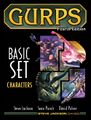 4th Edition Characters
 -
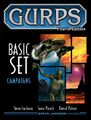 4th Edition Campaigns


Links
- 2 rulebooks.
- some rulebooks
- More rulebooks from VK. Start.
- Even more VK rulebooks.
- Antifriz Group, with files of GURPS. E.G., folder with GURPS rulebooks.
- From data base:
- GURPS Classic, lots of it. (archived)
- bestiaries, CNTRL+F «GURPS» (archived); e.g. space bestiary (archived).
- Miscellaneous books: GURPS Amber (archive), Ghostbusters GURPS (archived).
- From beta-site data base:
- GURPS Classic, lots of it. (archived)
- bestiaries, CNTRL+F «GURPS»; space bestiary.
- Miscellaneous books: GURPS Amber (archive), Ghostbusters GURPS.
- GURPS PDF's.
- Lists of unofficial bestiaries and official bestiaries (google in other place).
- Game help in development.
- New game help site in development.
- Search in publications. For example, Tactical Shooting gear (old).
- Archive of 4e wiki. About 10% pages archived.
- List of weapon statblocks.
- More weapon statblocks, navigation.
- A few rulebooks.
- Also quite a lot of rulebooks.
- GURPS eggplant. Statblocks and other things.
- TG Boards Images. Some are about GURPS, some aren't. Filter PDF. (example, example)
- Game wiki.
- Some rulebooks. 3e Cabal, 4e Low-Tech, 4e Prime Directive.
- Monster Statblocks
- Animalia, animal statblocks
- Eric's GURPSland (also known as gurpsland.no-ip.org ).
- Internet Archive Search:
- Old TG files. Some about GURPS, some not, filter PDF. E.G. Fantasy GURPS.
- GURPS Fallout
- Some rulebooks
- Small list of TRPG's including GURPS
- GURPS Dungeon Fantasy